A familiar topic can become forgettable when its angle is too broad or predictable. Creative presentation topics don’t work that way. They pull attention before the first slide appears. They give an audience a reason to lean forward instead of checking their phone. They make the speaker’s job easier, because the subject itself is doing half the work.
This guide offers sixty topic ideas and ways to develop a focused angle for your audience. Check each premise against reliable sources before building the argument.
What Makes a Presentation Topic “Creative”?

The word gets used loosely. A creative presentation topic isn’t necessarily whimsical or unconventional. It’s not about picking the most obscure subject or forcing a joke into your opening slide. Creativity, in this context, is structural.
A topic is creative when it does at least one of the following:
It reframes something familiar. The audience thinks they already know what you’re going to say — and then they don’t. This gap between expectation and reality is where attention lives. “The psychology of procrastination” is a well-worn subject. “Why procrastination is often a symptom of perfectionism, not laziness” is a creative take on the same material.
It connects two things no one expected to connect. Cross-domain thinking produces some of the most memorable presentations. What does behavioral economics have to do with restaurant menu design? What can prison reform teach us about corporate onboarding? The surprise of an unexpected connection creates a kind of intellectual pleasure that audiences want more of.
It finds the human story inside an abstract idea. Data, research, and policy are genuinely important — but they rarely move people on their own. A creative topic finds the person inside the statistic, the moment inside the trend. The audience stops processing information and starts experiencing something.
It takes a position most people avoid. Safe topics produce safe presentations. A creative topic is one where the speaker is willing to argue something, defend something, challenge something. That willingness to take a stance creates tension — and tension keeps people listening.
60 Creative Presentation Topics Organized by Category
Creative Speech Topics for Technology and Society
Technology presentations default toward hype or fear. Neither is interesting. The creative approach finds the specific, human-scale consequence of a technological shift — the part that isn’t in the press release.
- Why the world’s most sophisticated AI struggles with problems a five-year-old solves instantly
- The people who opt out of smartphones entirely — and what their lives look like
- How autocomplete is quietly changing the way people write and think
- The revenge of the landline: why analog communication is making a comeback in specific industries
- What happens to a city when all its taxis become algorithms
- The second-order effects of GPS — how navigation tools changed our spatial memory
- Open source AI: the most important tech debate nobody outside the industry is having
- Why recommendation systems attract so much computing power
- The digital afterlife: what happens to your online accounts, data, and identity when you die
- How video game designers accidentally became some of the best behavioral psychologists in the world
Unique Presentation Ideas for Psychology and Human Behavior
Human behavior is inherently compelling — but only when the presenter avoids the obvious. The creative angle is almost always the one that makes the audience slightly uncomfortable with what they recognize about themselves.
- The science of why people confess to crimes they didn’t commit
- Why we find faces in random objects — and what that reveals about how the brain processes reality
- The social psychology of queuing: why line-cutting feels like a moral violation
- Nostalgia as a coping mechanism — what the research says about why the past keeps getting better
- How we decide who to trust in the first five seconds of meeting someone
- The psychology of “completion” — why unfinished tasks occupy our minds disproportionately
- Contagious yawning and empathy: what studies suggest and what remains uncertain
- Why embarrassment is evolutionarily useful — the surprising function of wanting to disappear
- The IKEA effect: why we value things more when we’ve partially built them ourselves
- How the order in which options are presented shapes every decision we make
Creative Topics for Business and Economics
Business presentations are among the easiest to make interesting because every business story is ultimately a human story — someone tried something, something unexpected happened, something changed.
- The companies that accidentally invented their best products while trying to solve a different problem
- Why the most successful businesses in history were often not the first to market
- The economics of free: how giving things away became one of the most profitable strategies in commerce
- What the history of corporate logos reveals about how companies think about identity
- The business model of the midnight infomercial — and why it’s more sophisticated than it looks
- Why luxury brands deliberately create scarcity even when they could easily manufacture more
- The psychology of the subscription trap — how companies engineer the friction that keeps you paying
- What professional sports teams have figured out about building culture that most corporations haven’t
- The hidden economics of airport pricing — why a $14 sandwich makes perfect business sense
- How the gig economy accidentally rebuilt the labor market structures it was supposed to disrupt
Creative Speech Topics for Science and Nature
Science presentations become creative when they emphasize the question and the uncertainty rather than just the answer. The story of how something was discovered is almost always more interesting than the discovery itself.
- How languages categorize blue and other colors — and what this means for perception
- How a fungus has been quietly solving environmental problems that technology hasn’t cracked
- The evolutionary reason humans are uniquely bad at assessing risk
- What happens inside a black hole’s event horizon — and why we may never be able to verify it
- The bacteria living on your skin right now: a complete ecosystem most people never think about
- Why some animals evolved to die immediately after reproducing — and what it reveals about the logic of evolution
- The science of why left-handed people remain a consistent minority despite no apparent disadvantage
- Tree roots and fungal networks: what evidence supports the “wood wide web” idea
- The paradox of the Fermi question: if the universe is so vast, why haven’t we found anyone else
- What the most extreme environments on Earth reveal about the limits and adaptability of life
Creative Presentation Topics for Culture and Society
Cultural analysis produces excellent presentations when the speaker moves beyond observation (“this is happening”) to mechanism (“here’s why it’s happening and what it reveals”).
- Why dystopian fiction keeps getting more popular as the world materially improves
- The death of the third place — what happens to communities when there’s nowhere left to just exist
- How languages shape the emotions their speakers can easily express
- What fast food architecture tells us about the psychology of comfort and familiarity
- The global homogenization of music: why pop songs from different countries are converging on the same sound
- Celebrity culture as religion — the rituals, saints, scandals, and schisms
- Why people collect things — the psychology behind accumulation and attachment
- How the concept of “normal” body size has changed across different centuries and cultures
- The attention economy and the end of boredom — what we lose when we fill every idle moment
- What the architecture of prisons reveals about a society’s beliefs about human nature
Fun Creative Topics for Casual Presentations
Not every presentation needs to carry intellectual weight. Some of the most effective creative presentations are the ones that take something trivial completely seriously — applying rigorous analysis to an absurd subject. For a lighthearted talk that still teaches something, explore fun presentation topics with a useful takeaway and the suggested surface-to-evidence structure.
- A formal cost-benefit analysis of keeping a houseplant
- The thermodynamics of a perfect grilled cheese sandwich
- Why the grocery store is engineered to make rational decision-making nearly impossible
- An honest investigation into why we knock on wood
- The surprisingly complex evolutionary history of the domestic cat’s relationship with humans
- What traffic patterns reveal about collective human psychology at scale
- The complete geopolitics of board game Monopoly, taken entirely seriously
- How font choice affects whether people believe what they’re reading
- The economics and social signaling of coffee order complexity
- Why “sleeping on it” actually works — the neuroscience of overnight problem solving
From Creative Topic to Finished Presentation: A Step-by-Step Guide with Presenti AI
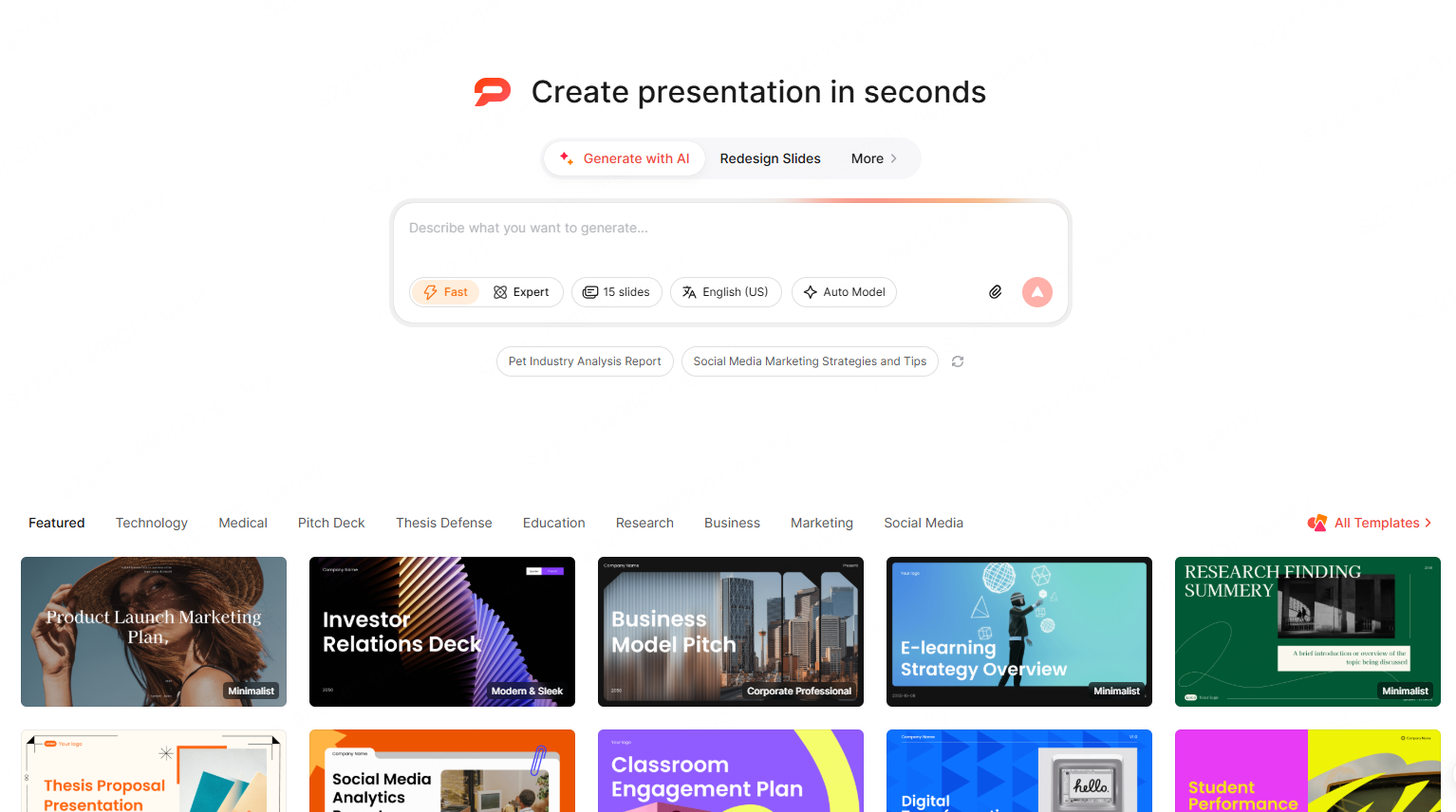
A genuinely creative topic deserves a presentation that does it justice. Presenti is an AI presentation maker that takes your topic, your notes, or your existing documents and generates a professionally structured, fully editable deck. Here’s how to use it from creative topic to finished slides.
Step 1: Explore free drafting access. Create an account and check the limited AI allowance shown for it. Confirm which inputs and exports are included before planning the full workflow.

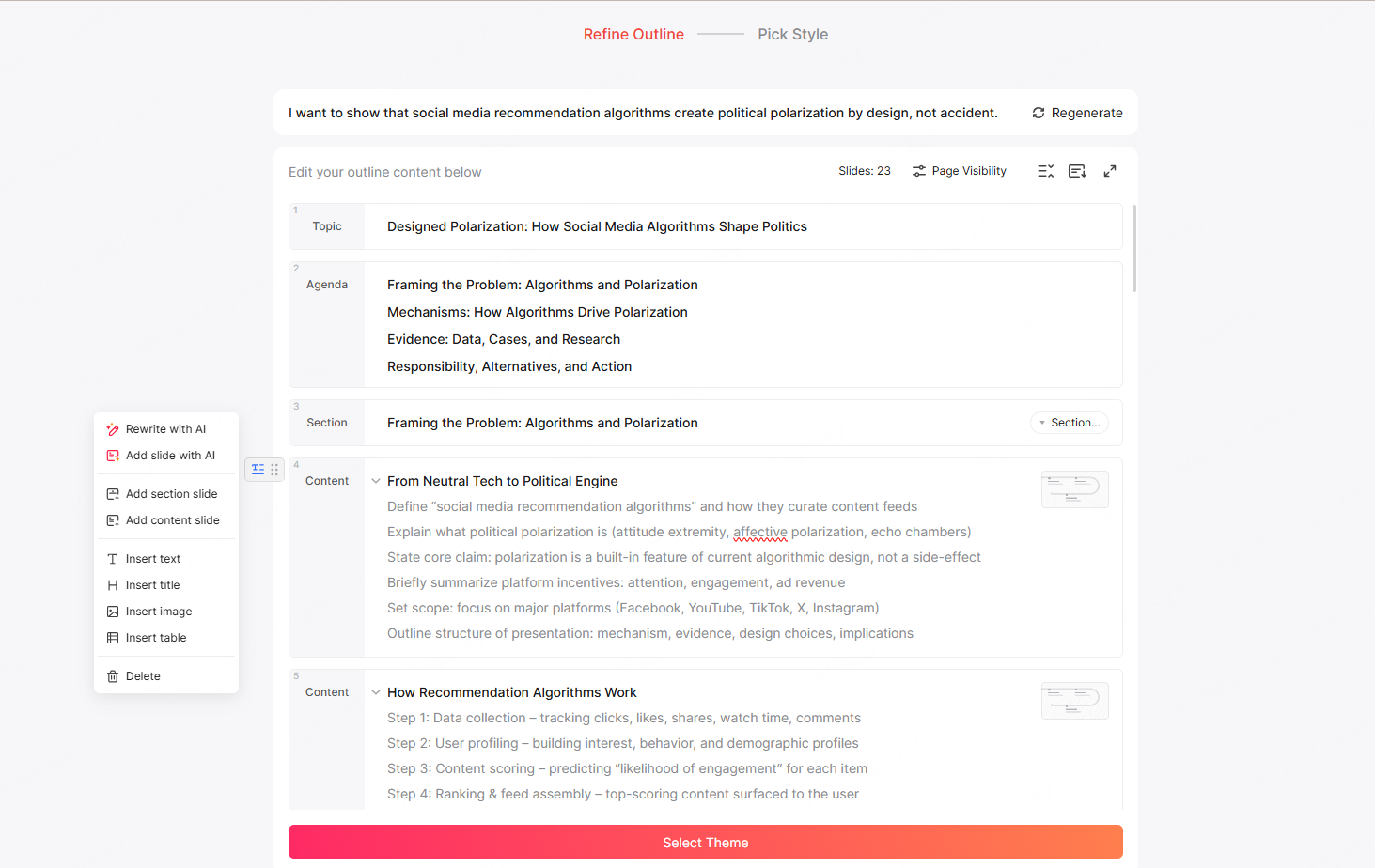
Step 2: Enter your topic, paste content, or upload a document. Type a brief or paste an outline. PDF and Word imports are listed on paid plans. Presenti's AI parses the input — identifying your core argument, key points, and logical structure — and generates a complete presentation outline. This is where raw presentation ideas become a working skeleton.
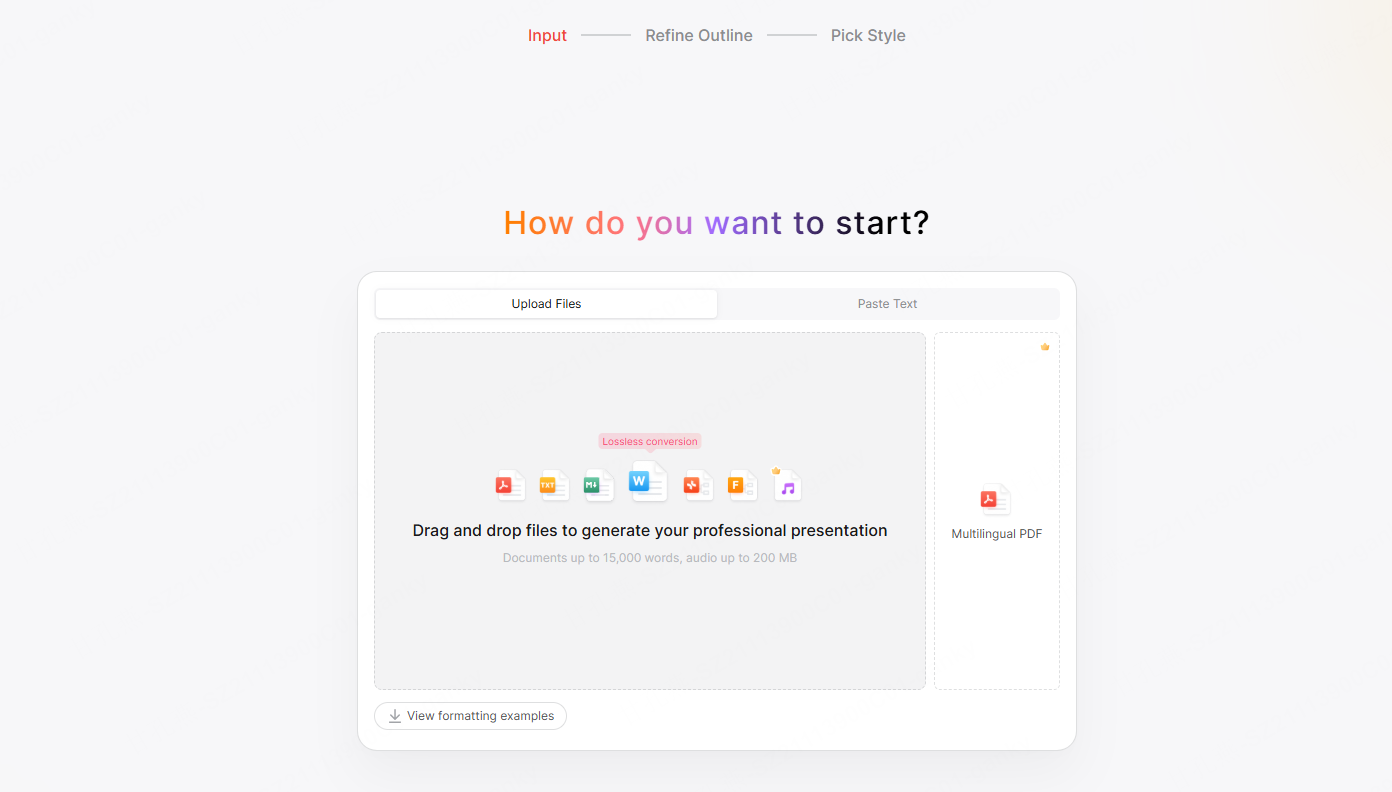
Step 3: Review and refine the AI-generated outline. Before slides are rendered, Presenti surfaces the full outline for your review. Check whether the opening creates the right tension, whether the counterintuitive claim lands where it will have maximum impact, and whether the conclusion drives toward a specific shift in thinking. Reorder, cut, or expand — the final structure is yours to control.
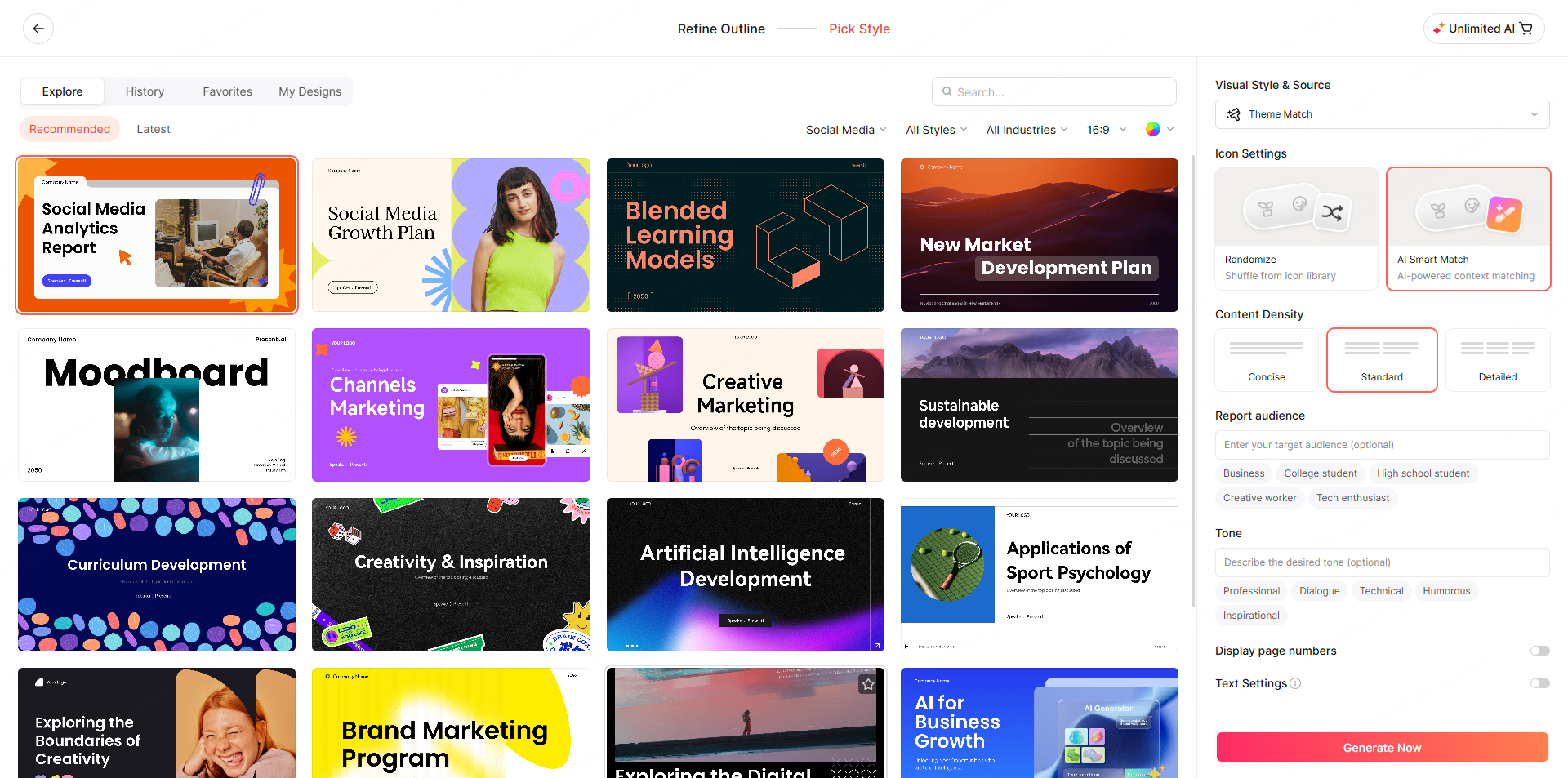
Step 4: Choose a template that fits your tone. Select from professionally designed templates organized by use case, industry, and visual style. A presentation on behavioral psychology calls for a different visual register than one on a cultural trend. Apply it across the entire deck in one click.
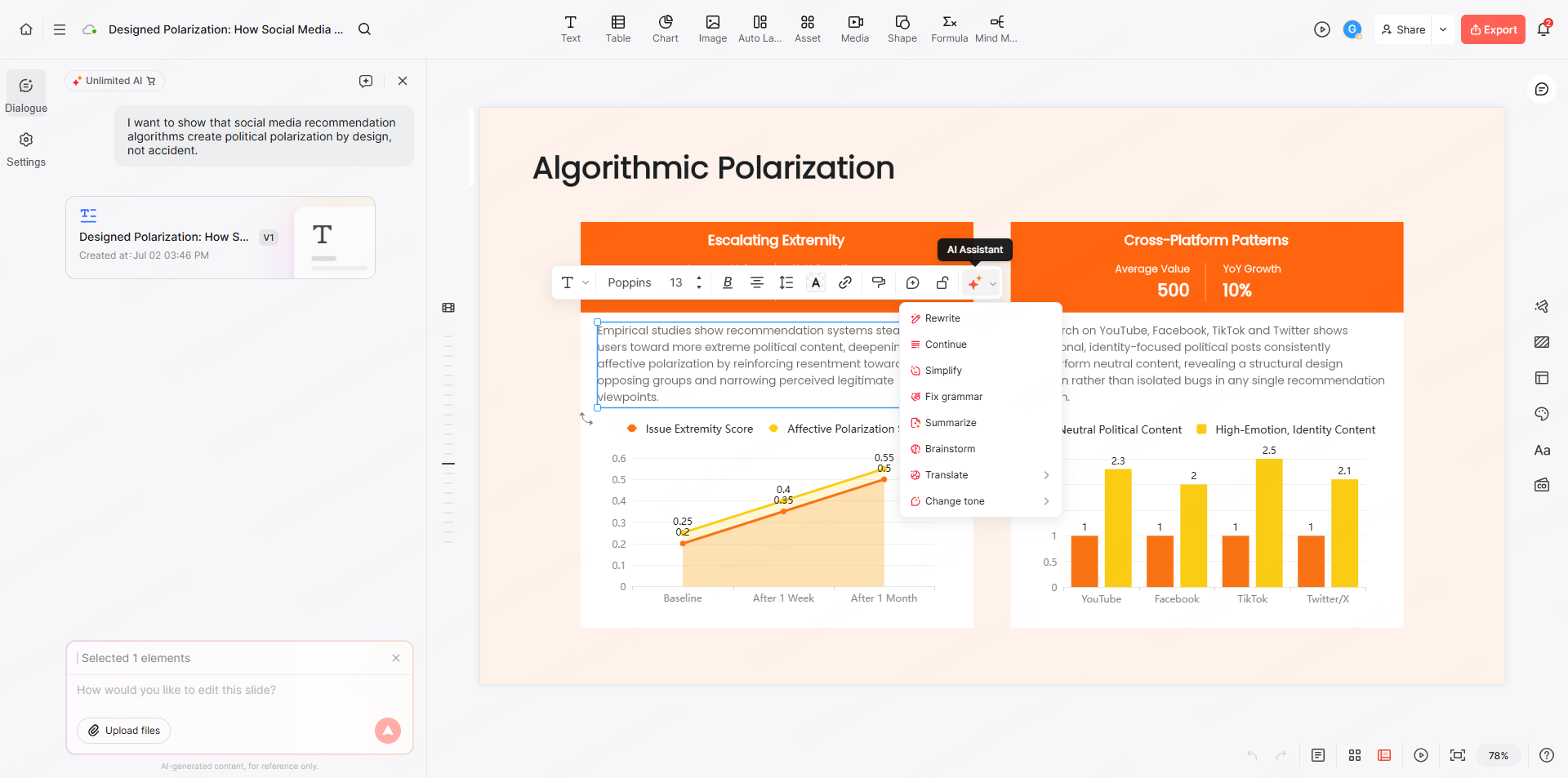
Step 5: Generate and refine the draft. Check the claims and examples, then use the available editor controls to shorten text, change layouts, and replace visuals. Inspect any objects you need to edit rather than assuming every element is live text.
Step 6: Present online or export to PPTX or PDF. Review the available browser-sharing options or use an eligible paid plan for editable PPTX/PDF export. Check the final file and the rights to any included assets.

Include research, revision, and export review in your preparation schedule. What that time savings actually buys isn't just convenience — it's the space to do what most presenters skip: rehearse until the argument feels natural, not recited.
How to Make a Boring Topic Creative
Sometimes you don’t get to choose. The subject is assigned, or it’s required for your role, or your audience expects a specific subject matter. The creative challenge then isn’t finding a new topic — it’s finding a new angle on a topic you’re stuck with.
The mechanism question. Whatever your topic is, ask: what is the process that makes this happen? Most presentations describe outcomes. The creative angle describes the mechanism — the specific sequence of causes that produces the result. “Inflation is rising” describes an outcome. “How central bank communication may influence expectations and consumer behavior” describes a mechanism. Mechanisms are inherently more interesting because they explain, rather than just report.
The counterexample strategy. Find the case where the conventional wisdom about your topic doesn’t hold. Every rule has exceptions. Every trend has reversals. Every consensus has dissenters. Finding the counterexample and spending real time on it — rather than dismissing it — signals intellectual seriousness and creates genuine engagement.
The human cost approach. Abstract topics become vivid when anchored in specific human consequences. Don’t present data on housing prices. Present data on housing prices through the lens of one specific city block over thirty years — who lived there, who left, what changed, what remained. The specific always illuminates the general.
The future projection method. Take your topic and push it ten or twenty years forward. What does the current trajectory imply about where things are heading? This works for almost any subject: the future of a technology, a cultural trend, an economic pattern. Forecasting — especially honest forecasting that acknowledges uncertainty — generates attention because the audience genuinely doesn’t know the answer.
The personal stake disclosure. Why do you, specifically, care about this topic? Telling an audience what’s personally at stake for you transforms a subject from information to conversation. It doesn’t have to be dramatic. “I’ve been watching this problem for three years and still can’t figure out why nobody’s talking about it” is enough to make a dry technical subject feel immediate.
Choosing the Right Creative Topic for Your Context
A creative topic that works brilliantly in one setting can land completely flat in another. Before committing, run your topic idea through three filters.
Who is in the room? Audience analysis isn’t about dumbing down — it’s about finding the entry point that makes your subject immediately relevant to the specific people you’re speaking to. The same idea about behavioral economics lands differently with a group of marketing professionals than with a room of high school students. The core argument can be identical; the entry point needs to shift.
What do they already believe? The most powerful creative presentations don’t just inform — they change something. To change something, you need to know what your audience currently thinks. Even when the audience agrees with the main point, useful evidence or a new example can deepen their understanding. The interesting territory is always somewhere in the gap between what they expect you to say and what you actually say.
What do you want them to do or think differently? A creative topic without a destination is just interesting noise. Before finalizing your subject, complete this sentence: “By the end of this presentation, I want my audience to ___.” The blank should describe a specific belief, action, or perspective shift — not just “understand more about X.”
Conclusion
Reframing a familiar issue, exploring a mechanism, and finding a human story are techniques you can practice. Use the sixty ideas as starting points, then check the evidence and choose an angle that fits your audience.
Presenti AI takes your idea — whether it’s a one-line brief, an outline, or an uploaded document — and generates a structured, fully editable presentation in minutes. You stay focused on sharpening the argument. Review the generated structure and design before presenting.