A bad presentation topic kills a room before the first slide — chairs shift, phones appear, eyes glaze over. Avoiding that comes down to one decision made before you write anything: the topic. Fun presentation
topics don't just entertain — the best ones use entertainment to make ideas stick. This guide covers what makes a topic genuinely fun (not gimmicky), where to find ideas for any context, and how to build your presentation once you've picked one.

What Makes a Presentation Topic Genuinely Fun (Not Just Silly)
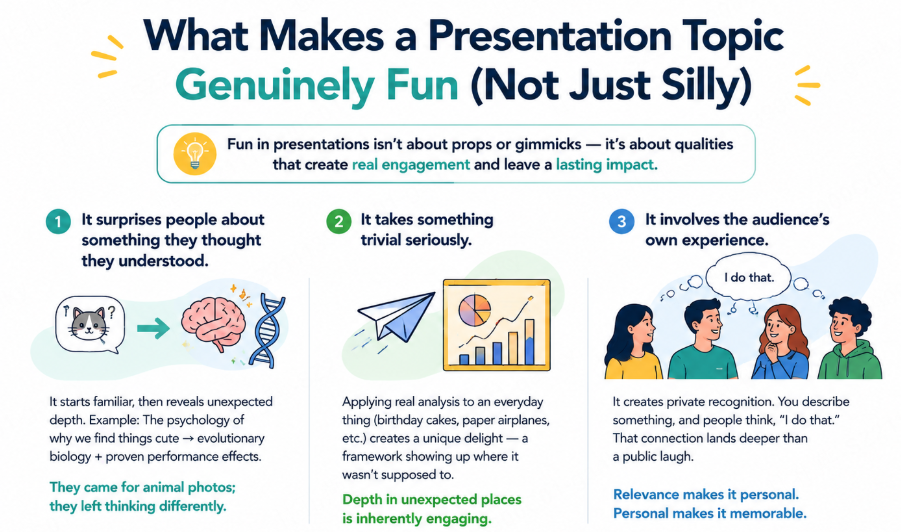
Fun sounds simple until you try to define it. In presentations, it doesn't mean props, costumes, or forced icebreakers — it means specific qualities that produce real engagement instead of polite laughter.
It surprises people about something they thought they understood. "The psychology of why we find things cute" sounds like light entertainment. It opens into evolutionary biology and a documented effect where cute images improve fine motor performance. The audience came for animal photos; they left thinking differently.
It takes something trivial seriously. The economics of birthday cakes. The aerodynamics of paper airplanes. Applying real analysis to a subject nobody thought worth analyzing creates a specific delight — a framework showing up somewhere it wasn't supposed to.
It involves the audience's own experience. Not "raise your hand if…" — more like good social observation. You describe something, and people think: I do that. That private recognition lands harder than a public laugh.
What separates fun presentation topics from merely silly ones is what's left behind. A topic that entertains without leaving anything is a party trick — and audiences notice fast, often within the first two minutes, whether there's real substance under the lightness. That's also what protects your credibility: the entertainment gets the idea into the room, but the idea is what makes people take you seriously.
50+ Fun Presentation Topics by Context
Fun Presentation Topics for Students
These work for classroom assignments, debate practice, or any setting where students have some latitude in topic selection. Each one carries enough substance for a 5–15 minute talk while remaining genuinely entertaining.
- Why yawning can be contagious and what researchers are investigating
- The science of why certain songs get stuck in your head
- How horror movies are engineered to scare you: the biology of fear
- The psychology of why we root for the underdog
- What your handwriting actually says about your personality (and what it doesn’t)
- Why we find babies cute: the evolutionary explanation
- The surprising history of the high five
- How the brain decides whether food tastes good
- Why we remember embarrassing moments more vividly than proud ones
- The real reason teenagers stay up late — it’s not rebellion, it’s biology
- What happens to your brain when you fall in love
- Why some people can’t visualize mental images at all — aphantasia explained
- The science of laughter: why we laugh when nothing is funny
- How optical illusions reveal the shortcuts your brain takes constantly
- Why some people experience music as physical sensation
Fun Topics for Office and Workplace Presentations
Professional settings don’t require dry topics. These work for team meetings, lunch-and-learns, and internal talks where a dose of levity is welcome — and where there’s still a point being made. If the session also needs a business outcome, use presentation ideas for specific work situations to distinguish a status update, a skills session, or a client discussion.
- The economics of the office snack: what free food actually costs and buys
- Why open-plan offices are quieter in theory than in practice — the acoustics of productivity
- What decades of research on handshakes reveals about first impressions in professional settings
- Why we sometimes procrastinate on apparently easy tasks
- How the design of a meeting room physically shapes the decisions made inside it
- Why “reply all” emails keep happening despite universal frustration — a behavioral economics analysis
- The history of the lunch break and its role in working life
- What competitive eating teaches us about human motivation and preparation
- The surprisingly sophisticated social contract of the office kitchen
- How agenda order can affect the time given to a decision
Fun Presentation Topics for Public Speaking Classes
These are well-suited for structured speaking environments where topics need to demonstrate skill rather than just fill time. Each one offers opportunities for storytelling, data, and a clear central argument.
- The complete history of the word “OK” — the most successful word ever invented
- Why identical twins raised together develop measurably different personalities
- The cognitive science of déjà vu: what we actually know
- How the placebo effect works when patients know they’re taking a placebo
- What researchers know about the prevalence of left-handedness
- The documented effects of font choice on how credible information appears
- Why the smell of old books makes people nostalgic — the chemistry of nostalgia
- What board games reveal about the culture that produced them
- How the five-second rule became a scientific research question (and what the research found)
- The evolutionary explanation for why we find symmetrical faces attractive
Fun Entertaining Topics for Community and Club Presentations
More casual settings call for topics that feel conversational and don’t require academic framing. These work for hobby groups, community organizations, and any presentation where the atmosphere is relaxed. If the gathering is a conversation rather than a solo talk, hot takes, questions, and debate formats for friends offer prompts for three different ways to involve the group.
- The competitive world of dog grooming competitions: a serious documentary about something absurd
- Why we are specifically bad at estimating how long things will take
- The sociology of queues: what waiting in line reveals about culture and character
- How spreadsheets changed the world (more than almost any technology you can name)
- Why the color orange was renamed after the fruit, not the other way around
- The surprisingly contentious history of daylight saving time
- What the most successful Kickstarter projects have in common with each other
- The economics of giving bad gifts — why we systematically destroy value every holiday season
- Why maps always lie, and what every map’s distortions reveal about the values of whoever made it
- The documented phenomenon of the “winner’s curse” — why winning an auction often means you overpaid
Fun Presentation Topics for Science and Technology Audiences
Technical audiences often appreciate fun topics precisely because most of what they hear is dense and serious. These maintain intellectual credibility while bringing genuine lightness.
- How a cat’s righting reflex works—and its limits
- How slime mold has inspired approaches to network problems
- What the chicken-and-egg question reveals about definitions and evolution
- The specific reason dogs and humans bonded when no other large predator did
- How bees vote on where to move the hive — a case study in distributed decision-making
- The mathematics of shuffling cards — how many orders a deck of cards can have
- Why ordinary glass is an amorphous solid, and where the liquid-glass myth comes from
- The science of why something that was never lost seems impossible to find
- What the Large Hadron Collider has taught us, in plain language
- How mantis shrimp vision differs from human vision
How to Add Depth to a Fun Topic Without Draining the Energy
Most fun presentations fail in one of two directions: all laughs and no substance, or so much evidence the fun disappears. The fix is a simple structure.
Lead with the surface. Open with what's immediately engaging — the surprising fact, the absurd premise. This earns the attention you'll need once things get slightly more substantive.
Go one layer deeper. A talk about songs that get stuck in your head can examine how researchers study repetition and musical memory. Explain one finding and its limits in plain language rather than overwhelming the audience with every theory.
Keep evidence focused and traceable. Choose a few relevant sources and explain what they establish. Add concise citations on the slides or in notes so listeners can follow up on a surprising claim.
End with an unexpected application. The best endings turn a trivial topic into a non-trivial implication: ten minutes on why we root for underdogs, closing with how brands and campaigns engineer that exact perception on purpose. The audience came for entertainment and left with something they'll use.
Choosing the Right Fun Topic for Your Specific Audience
A fun topic is only fun if it lands with the people in the room. The same subject that delights one audience can fall flat with another — not because the material changed, but because the entry point needs to shift.
What does this audience already find interesting? Fun topics succeed when they connect to existing curiosity. A tech audience will lean into a presentation about the physics of how something trivial works. A creative audience responds better to cultural analysis or psychological observation. Find the register your audience is already operating in, then bring your fun topic in through that door.
How much time do you have? Short slots (five minutes or less) favor topics with a single surprising fact at the center. The fun lands fast, the implication follows immediately, and you’re done. Longer slots allow for the layered structure described above — surface, depth, unexpected application. Trying to run the layered structure in five minutes produces a rushed presentation that feels neither fun nor substantial.
What’s the energy of the room likely to be? An after-lunch session calls for a different kind of fun than a morning kickoff. A room full of people who’ve just sat through three hours of dense content needs something that wakes them up fast, which usually means opening with a surprising claim or a question nobody knows the answer to. A room at the start of an event can handle a slightly slower build to the payoff.
Is anyone likely to be offended? Fun topics rarely cause genuine offense, but some subjects carry associations worth thinking about in advance. Humor about human behavior, biology, and cultural norms generally travels well. Humor that requires the audience to laugh at a specific group, including their own group, requires a reading of the room that only the presenter can make in the moment.
From Fun Topic to Finished Presentation: A Step-by-Step Guide with Presenti AI
You’ve picked your topic. You know your angle. Now comes the part that usually takes longer than it should: turning the idea into a deck that’s clean, visually coherent, and structured to deliver the fun and the substance in the right order.
Presenti is an AI presentation maker built specifically for this gap. It takes your topic or rough outline and generates a professionally structured, fully editable presentation — so the time you’d normally spend formatting slides goes into the content itself instead. Here’s the exact process.
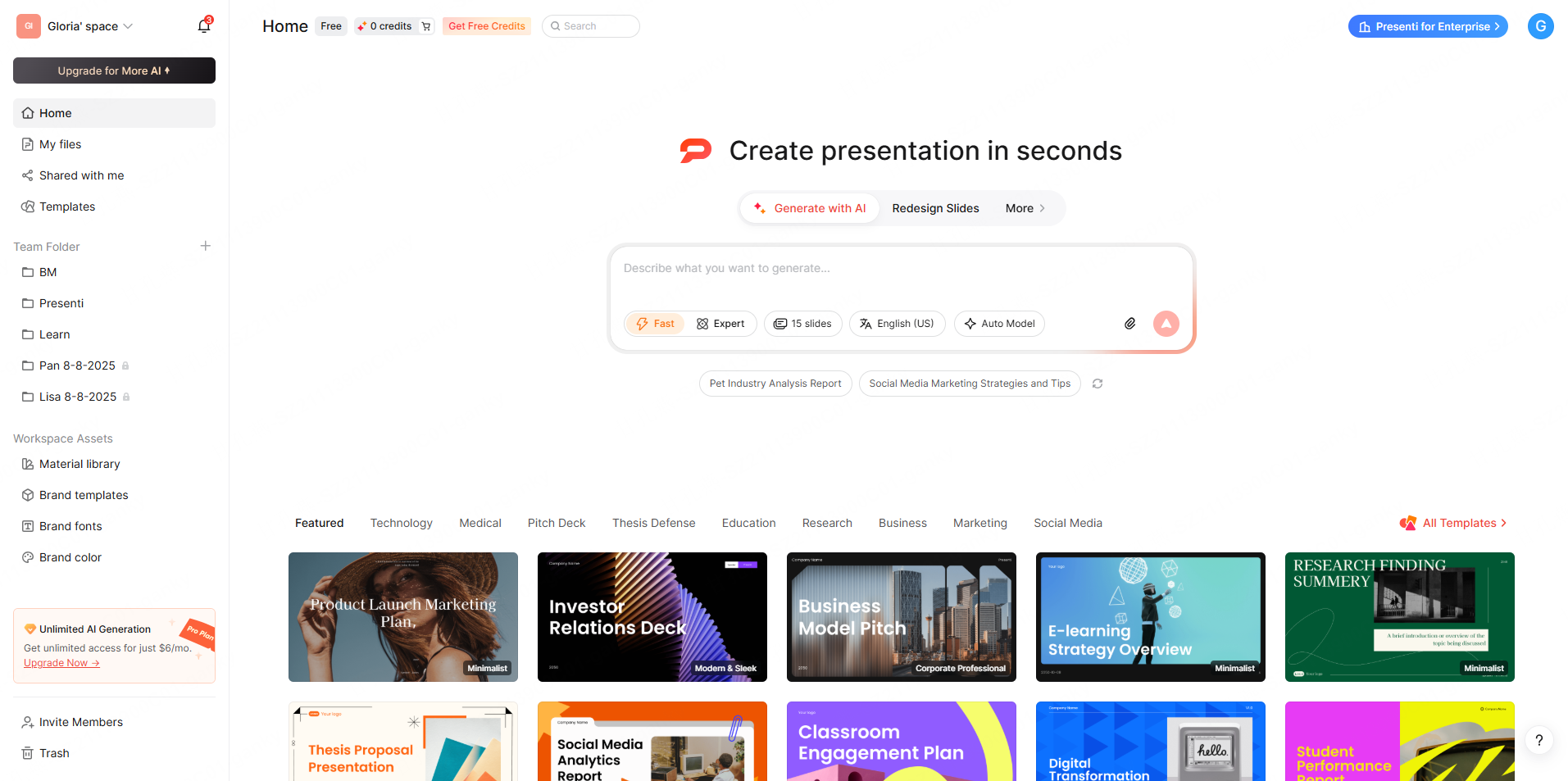
Step 1: Open Presenti and enter your brief.
Go to presenti.ai and start a new project. Paste in your one-sentence premise and any rough notes you’ve gathered — a few bullet points about the main points you want to hit is enough. Presenti’s AI reads your input and generates a complete slide structure, including section headings, content blocks, and a narrative arc that reflects the logic of your specific angle rather than a generic presentation format.

Or Upload any source material.
Prepare the sources that support your main claims, then use a file format included in your Presenti plan. Word/PDF/TXT input is listed on paid plans. Compare the generated wording with the original source and retain citations.
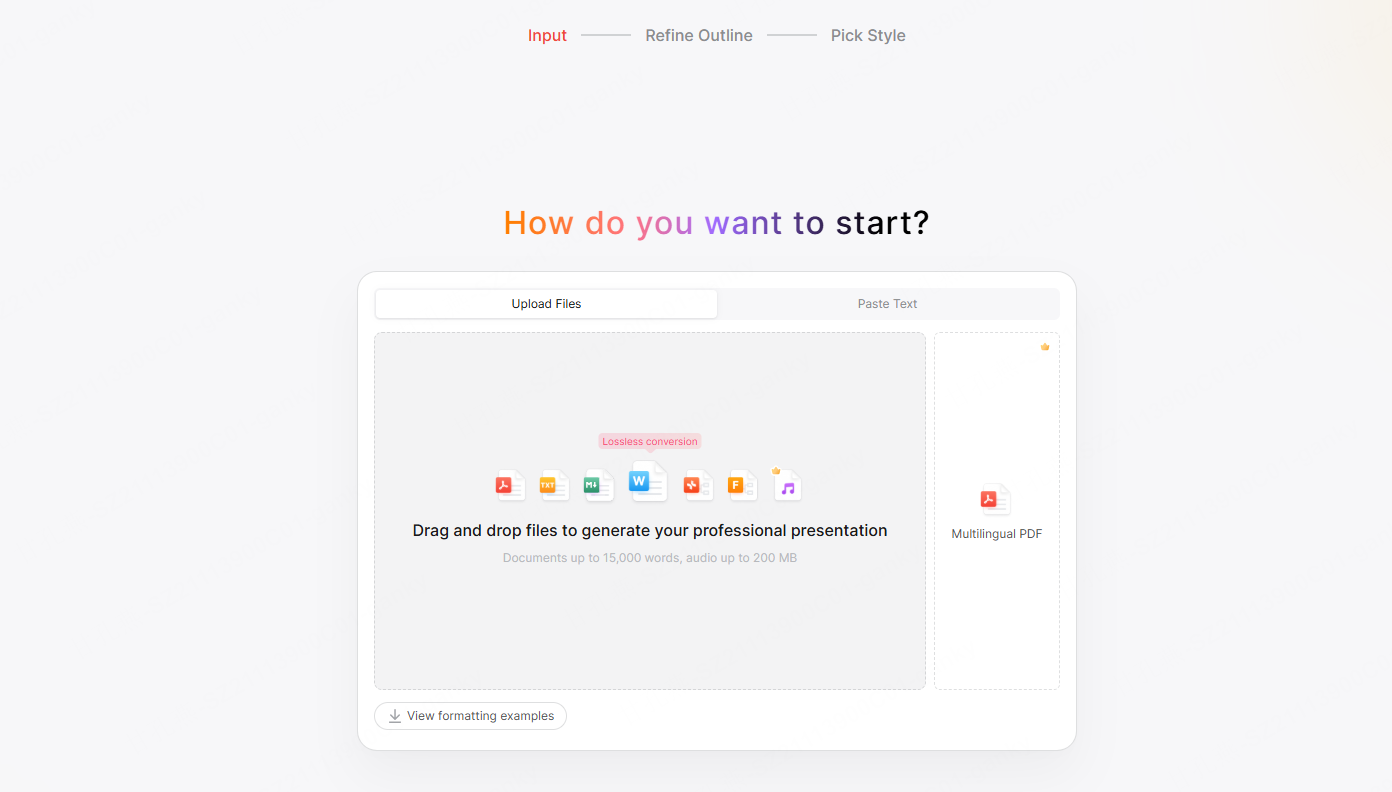
Step 2: Check the opening and the ending first.
Scan the generated structure and go directly to the first slide and the last. The opening of a fun presentation needs to create immediate intrigue — a surprising statement, an unexpected question, a counterintuitive claim. The ending needs to land the depth: the non-trivial implication that makes the fun surface worthwhile. If either of these isn’t right in the generated outline, adjust them before working through the middle. The shape of a fun presentation is set at the opening and the close.
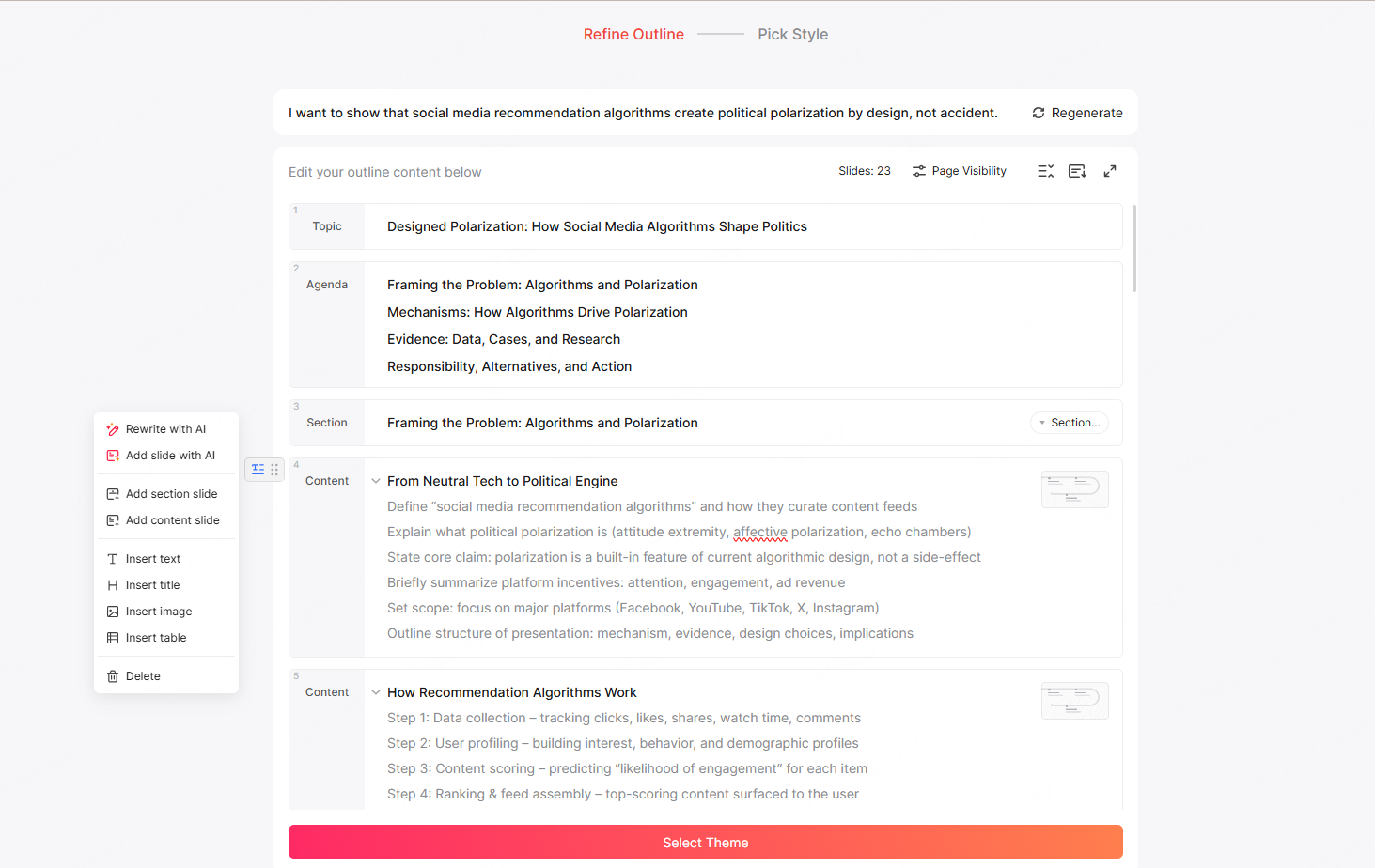
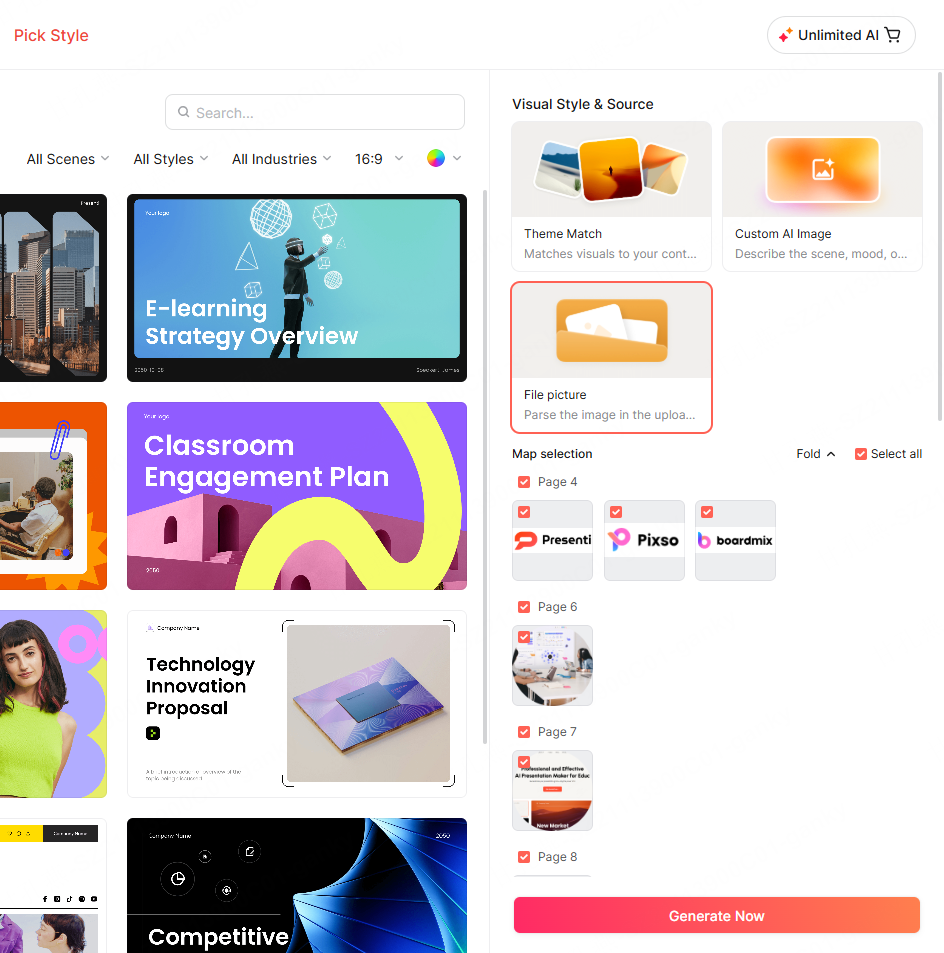
Step 3: Choose a template that matches the energy.
Presenti’s template library covers a range from clean and minimal to bold and graphic. A fun topic about human psychology might work beautifully with a high-contrast, expressive template that signals energy. A fun topic in a more formal professional setting might need something cleaner — the lightness comes from the content, not the design. Apply the template across the full deck and adjust individual slides as needed.
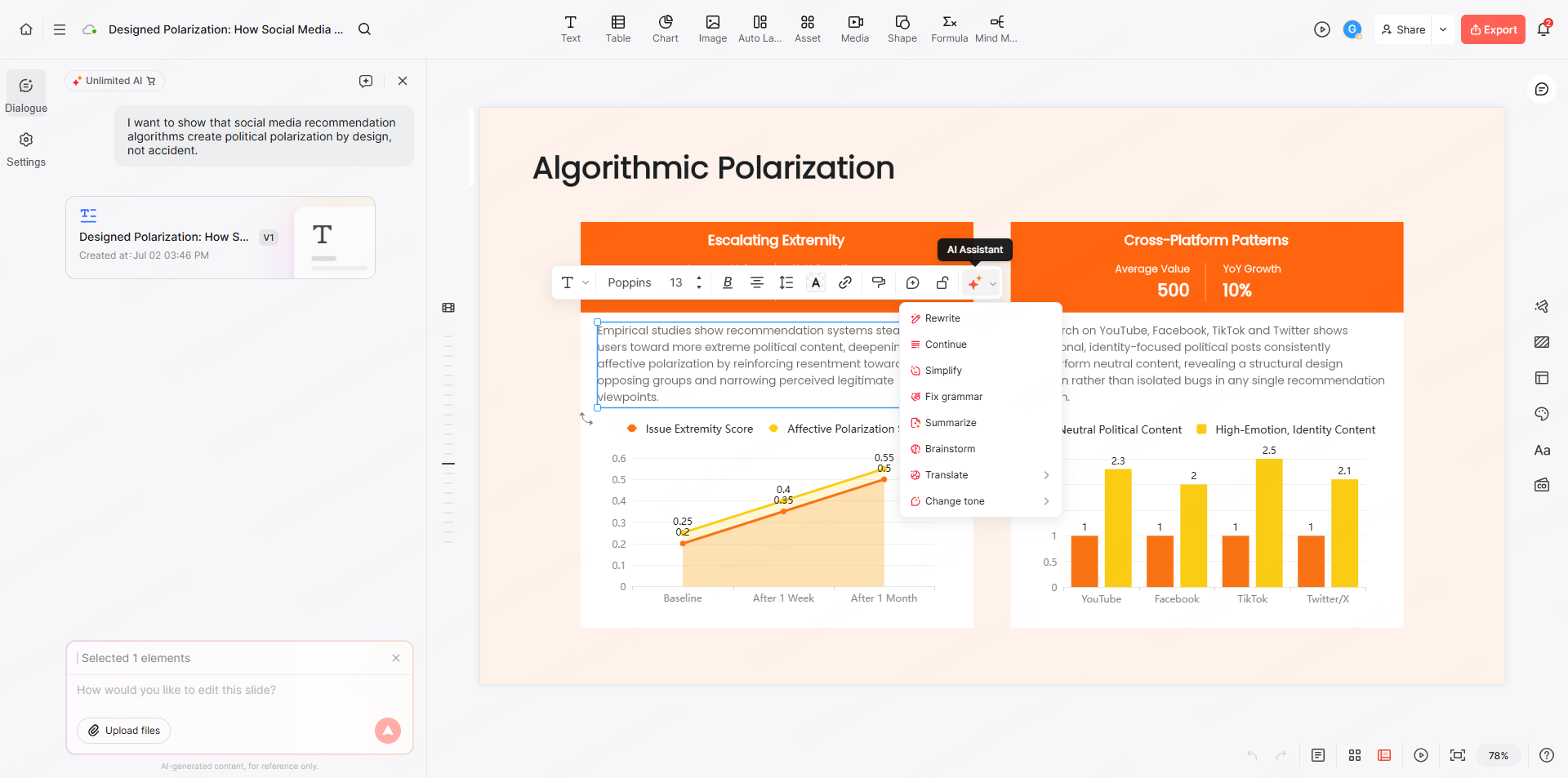
Step 4: Refine the language with the AI Agent.
Presenti’s conversational editing feature is where the tone gets refined. Use plain language instructions: “Make this slide punchier,” “trim this down to one sentence,” “add a visual comparison between these two ideas,” “the closing slide needs to feel like a landing, not a summary.” The AI executes each instruction without requiring design or formatting knowledge. This is the stage where a competent fun presentation becomes one that actually delivers.
Step 5: Export and rehearse the timing.
Use the PPTX or PDF export included in your paid plan and open the file in your presentation software. For fun presentations specifically, the rehearsal needs to focus on timing. Where are the natural pauses — the moments where you let a surprising claim sit before explaining it? Where do you step away from the slides and just talk directly to the audience? Where does the energy need to pick up because a dense slide is coming? These beats are built in rehearsal, and getting them right is what turns a good fun presentation into one the audience keeps talking about afterward.
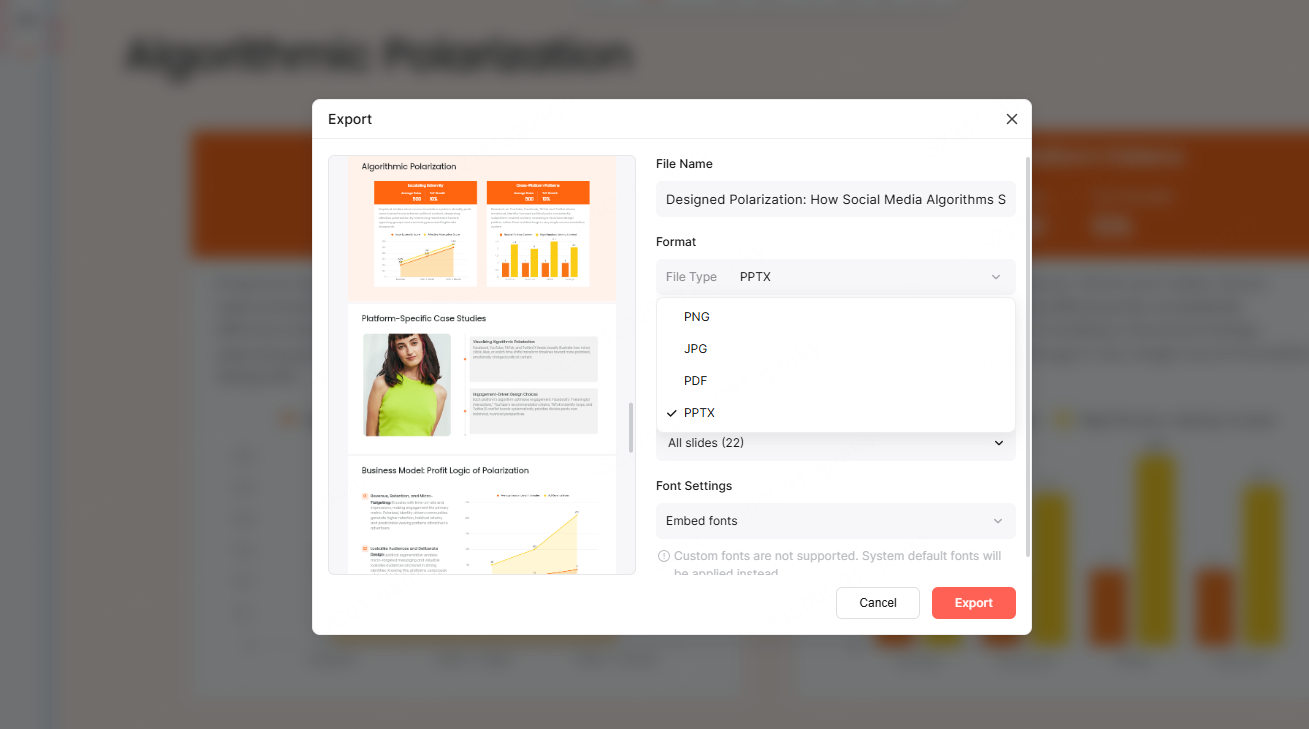
Leave time to check the evidence and rehearse the timing after generating slides. The best use of the draft is to help organize the material, while you decide where to pause, explain, or invite a response.
The Real Purpose of a Fun Presentation Topic
Fun is not a concession. It’s not what you do when the subject doesn’t matter, or when you want to coast, or when you’ve given up on the audience taking you seriously.
The most skilled communicators in any field — the teachers whose students remember a lesson twenty years later, the speakers whose talks get reshared and revisited — understand something about attention that most presenters don’t: you can’t reason your way into a room that isn’t listening, and you can’t make someone care about an argument they never engaged with. Fun is the mechanism by which you earn the right to say the thing you actually came to say.
Pick a topic that genuinely delights you. Find the surprising truth underneath it. Deliver it with enough energy that the audience forgets, for a moment, that they’re supposed to be paying attention — and then give them something worth having paid attention for.
That’s what a fun presentation topic actually does, when it’s done right.