A customer profile template should turn research into a specific, usable segment story: who the buyer is, what triggers action, what they need, how they decide, what evidence supports the claim, and what the team will do differently. A useful customer profile presentation is not a demographic poster. It is a decision tool for marketing, sales, product, and customer teams.
This guide is for teams creating a new profile, refreshing an outdated buyer persona, or preparing an ideal customer profile presentation for a planning cycle. It also applies when a product or growth team needs a customer profile presentation that can survive review and guide real work.
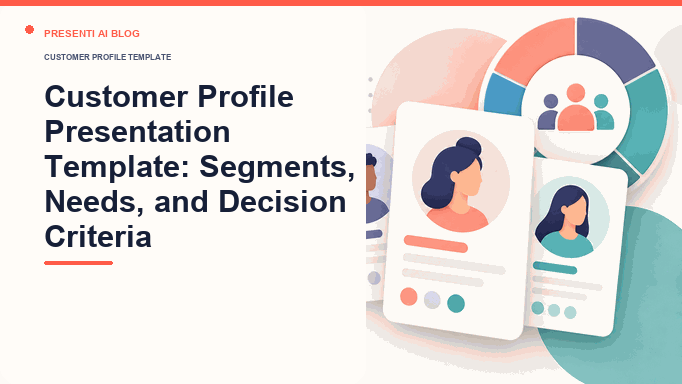
What Should a Customer Profile Presentation Decide?
The presentation should help the audience decide which customer group deserves focus and how the team will serve it. Start with the buying situation, not a list of adjectives. A useful profile answers: who experiences the problem, what event makes it urgent, what outcome they need, what they use today, and why the team can credibly help.
For a B2B audience, separate the account from the people inside it. An ideal customer profile describes the organization and buying situation that fit the offer; a buyer persona describes a specific role, its goals, and its influence on the decision. A useful deck can show both without treating them as interchangeable.
Write a one-sentence profile thesis. For example: "Mid-market operations leaders who are preparing for a quarterly audit need faster exception reporting, currently rely on manual spreadsheets, and will evaluate a solution on implementation effort, reporting accuracy, and time to first result." That sentence gives the role, trigger, problem, alternative, and decision criteria.
| Profile question | Evidence to show | Decision enabled |
|---|---|---|
| Who is the buyer? | Role, context, decision rights, and buying unit | Choose the segment to prioritize |
| Why now? | Trigger, urgency, consequence, and current workaround | Focus the message and offer |
| What do they need? | Functional, emotional, and business jobs to be done | Shape product, content, and sales enablement |
| How do they decide? | Criteria, proof, objections, blockers, and approval path | Build the right evidence and next step |

Which Slides Belong in a Customer Profile Deck?
A practical working deck can use the following ten-slide sequence, with an appendix for interview notes, research detail, and source data. The main deck should move from segment choice to evidence, decision criteria, implications, and actions.
- Profile headline. State the segment, buyer, trigger, and the decision the profile supports.
- Segment context. Explain the market, company type, role, and buying situation.
- Trigger and urgency. Show what changes and why the buyer acts now.
- Needs and goals. Separate functional, business, and personal outcomes.
- Current alternatives. Show the workaround, incumbent, or internal build.
- Decision criteria. Rank what the buyer evaluates and who influences each criterion.
- Evidence. State the interviews, behavior, product data, and confidence behind the profile.
- Objections and risks. Name likely blockers, proof gaps, and mitigation.
- Implications. Explain what changes for messaging, sales, product, or service.
- Next action. Assign one test, owner, measure, and review date.
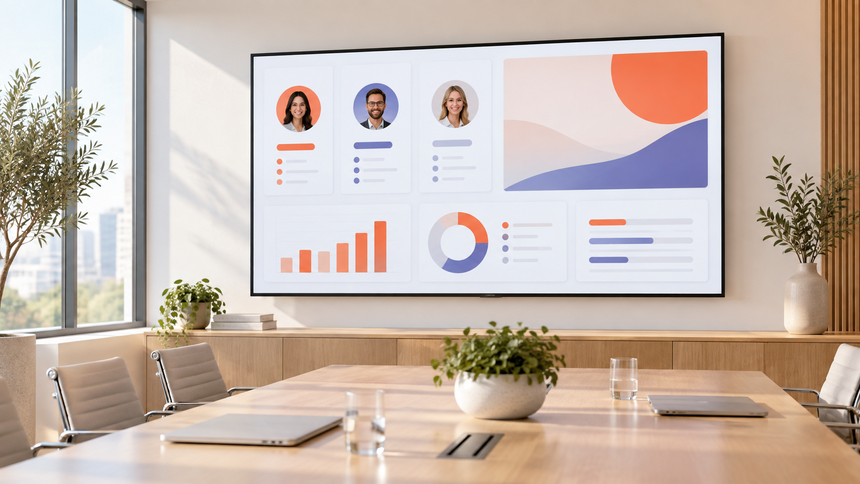
Keep the customer profile template reusable without making it generic. The fields can stay stable across segments, but the evidence and decision criteria must change. A profile that could describe any business has not earned its place in the deck.
How Do You Build a Profile from Evidence?
Start with the evidence you already have: sales calls, win/loss notes, support conversations, product usage, website behavior, and customer interviews. Then label what is confirmed, inferred, or still unknown. This follows the evidence-first boundary in the GOV.UK Service Manual: user needs should come from research rather than stakeholder assumptions. A buyer persona template is only useful when the team can tell the difference.
| Evidence source | What it can reveal | Limitation to state |
|---|---|---|
| Customer interviews | Language, triggers, goals, objections, and context | Small samples and selection bias |
| Win/loss reviews | Decision criteria, proof gaps, and competitor role | Recall bias and incomplete records |
| Product behavior | Actual actions, adoption, retention, and feature use | Does not explain motivation without context |
| Sales and support data | Common questions, blockers, and service patterns | Reflects existing process and customer mix |
Build the profile in layers. First describe the buying situation. Then add needs, criteria, alternatives, objections, and proof. Finally, write the implication for the team. Each layer should be traceable to a source or marked as an assumption. When several researchers are involved, review observations together before turning patterns into findings; this helps keep interpretation separate from what participants actually said or did.

What Should You Show About Needs and Decision Criteria?
Needs are not the same as features. Show what the buyer is trying to accomplish, what happens if they fail, and which outcome matters most. Then show the decision criteria in the buyer's language, with the relative importance and the proof the buyer expects.
| Decision criterion | Buyer question | Proof required | Owner |
|---|---|---|---|
| Outcome | Will this solve the problem we prioritized? | Example, test, or customer evidence | Product marketing |
| Confidence | Can we trust the claim and the team? | Source, limitation, reference, or demonstration | Sales engineering |
| Effort | How much work will adoption require? | Implementation steps, roles, and timeline | Customer success |
| Commercial fit | Does the value justify the price and risk? | Value model, package, and proof of payback | Sales and finance |
Name the buying unit as well as the user. In many organizations, the person who feels the problem is not the person who approves the budget. The ideal customer profile presentation should show the user, buyer, blocker, influencer, and approver, along with the question each person needs answered.

What Does a Practical Customer Profile Example Look Like?
The following example is hypothetical; its values demonstrate the structure of a profile rather than observed customer or Presenti results. Consider a project management software company evaluating a new segment. The profile headline might focus on operations leaders at 200-500 person service businesses who are preparing for a compliance audit. The trigger is an upcoming audit; the need is faster evidence collection; the alternative is a spreadsheet plus email; the criteria are accuracy, implementation effort, audit trail, and price confidence.
In this fictional brief, the evidence includes eight interviews, win/loss notes from the past two quarters, and product data suggesting that teams with audit workflows retain longer. The profile also states what is not yet known: whether the buyer prefers a self-serve trial or a guided pilot. The next action is a two-week message test with one sales team, one landing page, and a clear review date.

The example should make it obvious what the team will change. If the profile does not affect a message, offer, qualification rule, or product decision, it is still research, not an operating profile.
How Can Presenti Turn a Profile Brief into an Editable Deck?
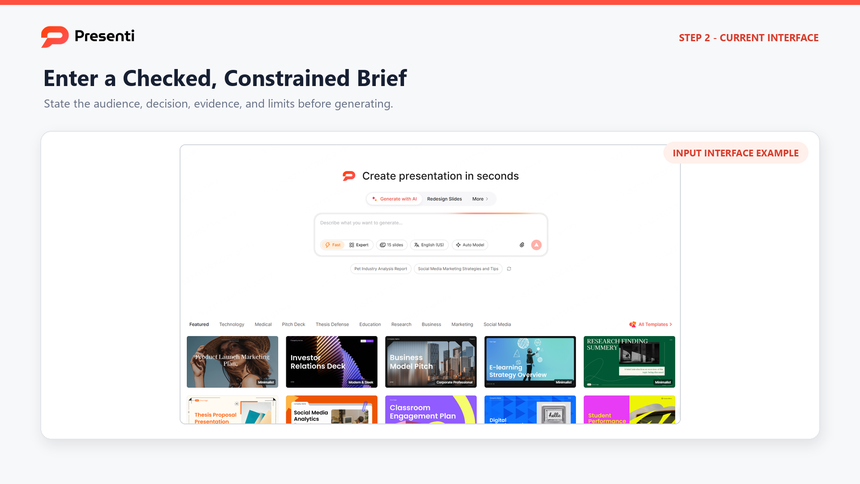
Once the team has the segment, evidence, decision criteria, and action, Presenti can organize the material into an editable first draft. Use text to presentation for a written profile brief. The workflow can shorten the path from notes to a structured deck, but it cannot validate interview evidence, invent customer language, or decide whether the segment is worth pursuing.
A free Presenti account includes limited AI usage for an initial draft; editable PPTX/PDF export is listed on paid plans. Enter the checked brief, review the proposed outline, and then choose a design in the Presenti template center. The result is an editable starting point tailored to the profile, while the research and commercial owners retain responsibility for every claim and decision.
Step 1: Enter a checked profile brief
Include the segment, buyer role, trigger, needs, current alternative, decision criteria, evidence sources, confidence level, open questions, and the action the profile should support. Remove customer names and sensitive data unless their use is approved. A constrained prompt can be:
Create a 10-slide customer profile presentation for a product marketing planning meeting. Audience: marketing, sales, product, and customer success. Include the profile headline, segment context, buying trigger, needs, current alternatives, decision criteria, evidence quality, objections, implications, and next action. Use placeholders for unverified claims. Do not invent interview quotes, market size, or customer results.
Check: the input should identify the audience, the decision, the evidence boundary, and the required slide sequence before generation starts.
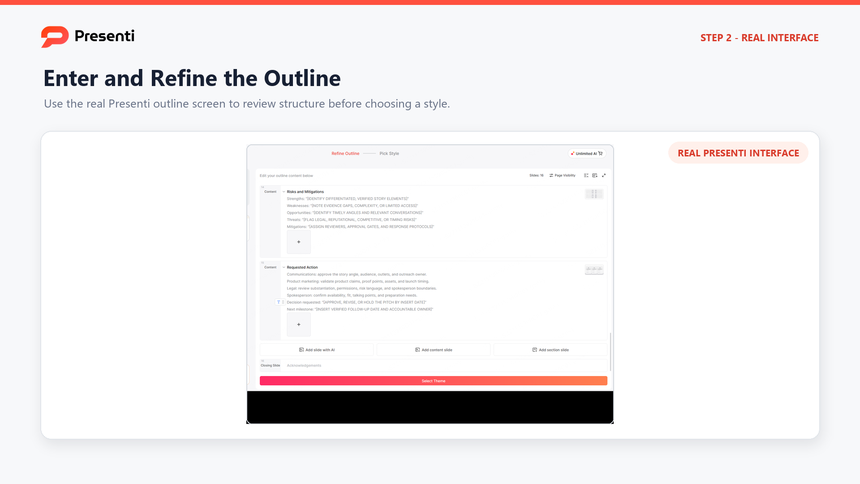
Step 2: Review and correct the outline
Confirm that the outline moves from segment choice to evidence, criteria, implications, and action. Remove generic persona fields, combine repeated research slides, and add a visible evidence-quality note where a claim is still uncertain.
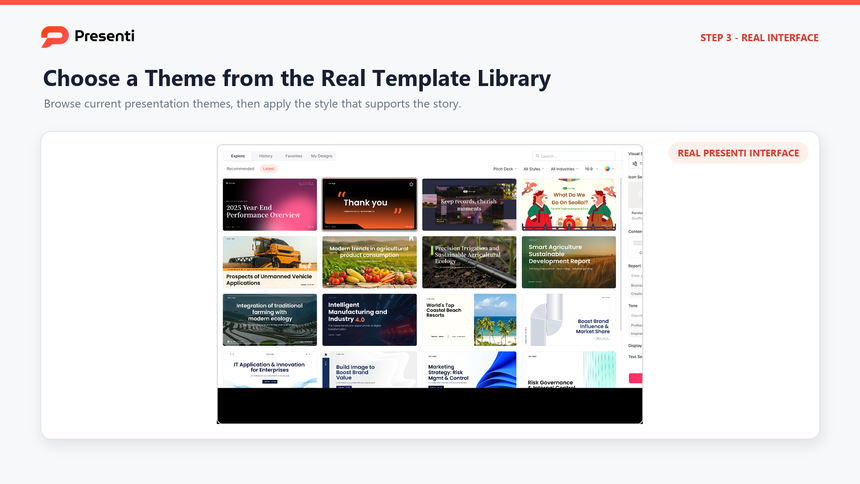
Step 3: Choose a template that supports the evidence
Preview a business or research template only after the structure is right. Favor readable comparison, timeline, and matrix layouts over decorative persona slides when the audience needs to inspect criteria, confidence, or buying roles.
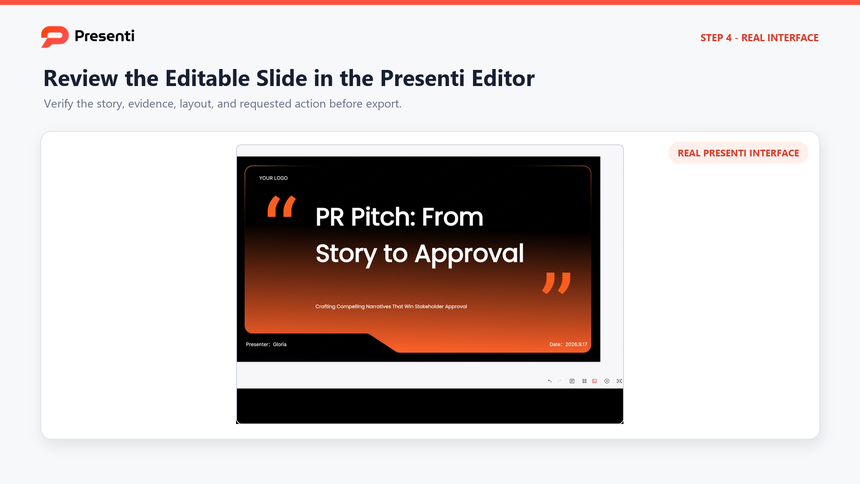
Step 4: Review the editable slides with the owners
Compare every claim with the interview notes, behavior data, or source record. Check names, segments, decision criteria, confidence labels, and the proposed action. Replace placeholders and remove internal research notes before sharing the deck.
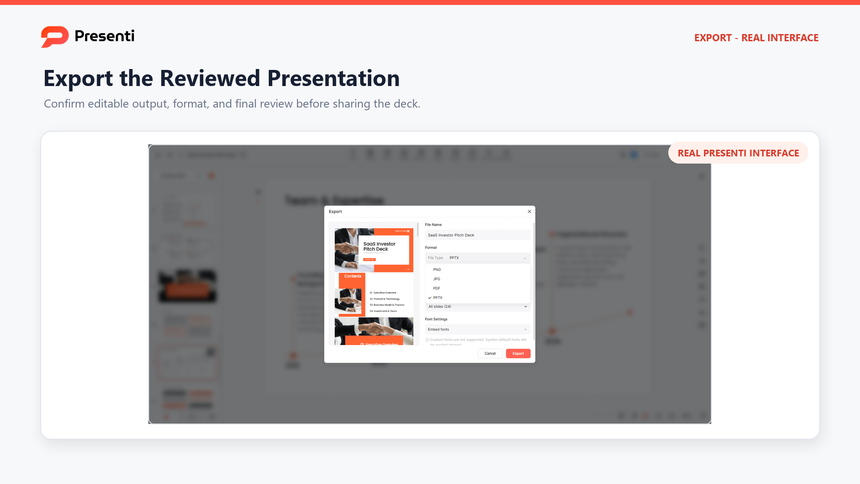
Step 5: Export only after the evidence review
Confirm the final file name and format only after the owners have approved the profile thesis, evidence labels, buyer language, and requested action. Reopen the exported file and check fonts, charts, notes, and confidential material before distribution.
The finished deck should make the segment choice and next action easier to review, not make uncertain evidence look finished.
Frequently Asked Questions
What should a customer profile template include?
Include the segment, buyer role, buying trigger, needs, current alternative, decision criteria, buying unit, evidence, confidence, objections, implications, and next action.
What is the difference between a customer profile and a buyer persona?
A customer profile usually focuses on the buying situation, evidence, and decision criteria. In B2B work, an ideal customer profile often defines the target account, while a buyer persona describes an individual role inside the buying unit. Use both only when each changes a real decision.
How many customer interviews are enough?
There is no universal proof threshold. The GOV.UK Service Manual says that 4 to 8 participants is typical for a round of interviews or usability tests, but the required number still depends on segment diversity, research questions, decision stakes, and the confidence needed. State the sample, source, date, and limitations rather than implying certainty.
How often should a customer profile be updated?
Review the profile when the market, product, buying process, or evidence changes. A scheduled review, such as quarterly for an active go-to-market program, can confirm what still holds and what needs new research.
Can a profile be based on internal data only?
Internal data can be useful, but it reflects the customers and process you already have. Combine it with interviews or market evidence when the goal is to expand, reposition, or understand a new segment.
Bottom Line
A customer profile is useful when it changes a product or marketing choice. Show the buying situation, the customer's needs, and the criteria they use to compare options. Connect those findings to interviews or observed behavior, and make unresolved questions easy to find before the team acts on them.