Start with the slide the audience is most likely to misunderstand. Give it one clear message, remove text that belongs in your explanation, and make the supporting evidence easy to see. The twelve tips below cover different jobs: visual alignment, story, wording, participation, data, titles, examples, animation, rehearsal, the ending, timing and accessibility.
If you are also exploring AI-assisted slide design, decide the message before choosing a new layout. The same editing principles apply to a manually built PowerPoint deck and an AI-generated draft.
If you have only one editing session: read the titles in Slide Sorter first, fix the weakest claim and its evidence, then rehearse in Slide Show. Use the relevant tips below for the problem you find. Adjusting every font before deciding the message usually means repeating that work.

1. Align related objects and keep the visual style consistent
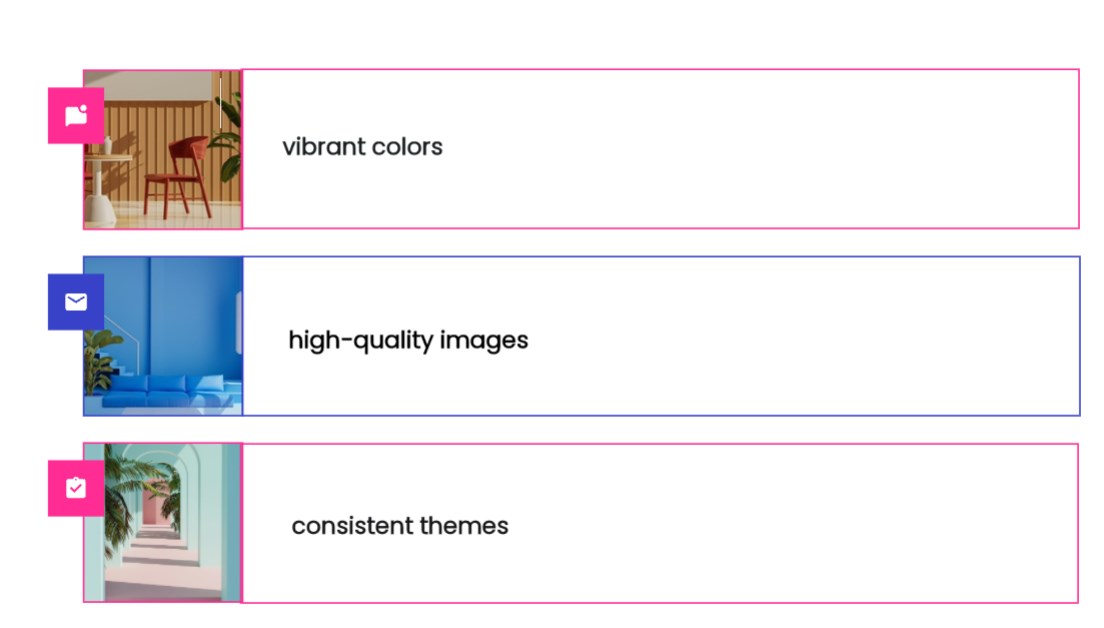
Use high-quality images and consistent themes to support the message, then align the objects rather than adjusting them by eye. For three callout boxes, select them together, open Shape Format → Align, choose Align Top, then Distribute Horizontally. Make sure you are aligning the selected objects rather than unintentionally moving them to the slide edge. Microsoft’s alignment instructions cover the desktop and web variants.
2. Craft a Narrative
Begin with the question or decision the audience faces, build the evidence in a logical order, and end with the next action. Open View → Slide Sorter to inspect the sequence without concentrating on individual layouts. Read only the slide titles: they should tell a coherent story. Microsoft’s guide to PowerPoint views explains where Slide Sorter fits into editing.
Before: “Background → Data → More data → Summary.” After: “The queue is growing → One request type drives the increase → Test a revised intake form → Decide who owns the pilot.” This is an illustrative storyline, not a reported customer result.
3. PowerPoint Clarity Tips
Use concise language and short phrases, but keep the meaning intact. Move the explanation into PowerPoint’s Notes pane rather than shrinking a paragraph until it fits. Keep the claim, the evidence and any condition that changes the conclusion on the slide.
Before: “We discussed several options and, provided the data source is approved, we think a two-week pilot could be useful.” After: “Proposed: a two-week pilot, subject to data approval.” Put the rejected alternatives in the speaker notes. The shortened line still identifies the proposal and its condition.
4. Interactive PowerPoint Tips
Plan one response that helps the presentation progress. For a training deck, ask learners to choose which example follows the rule before revealing the answer. For a decision meeting, ask which trade-off needs clarification. Test any polling tool with the actual presentation setup; a spoken question works when you do not need to collect results.
5. Label the comparison your chart is meant to show
Choose the chart from the question. Use bars to compare categories and a line to show change over time; do not add a chart merely to make the slide look busier. Keep units and the time window visible. If one category is the point of the slide, label it directly and keep the other categories visually quieter.
Before: a table of weekly counts with the title “Support data.” After: a bar chart titled “Missing fields account for 20 of 80 requests,” with “Requests in this sample” as the unit. These are illustrative numbers. Do not relabel the 25% share as an error rate for all customers.
Turn the sample into a slide someone can explain
| Slide element | What to put on it | Why it belongs |
|---|---|---|
| Headline | Missing fields appear in 20 of 80 sampled requests | Names the observation without claiming a trend |
| Chart | Two labeled bars: missing fields, 20; complete fields, 60 | Makes the part-to-whole comparison visible |
| Footnote | Illustrative sample; replace with the real date range and source | Keeps invented teaching data separate from business evidence |
| Decision line | Propose an intake-form pilot; results are not available yet | Separates the next action from the observation |
| Speaker notes | How requests were counted, excluded cases and alternatives considered | Preserves detail that would crowd the slide |
Do not turn the second bar into “successful requests”: the sample tells you whether fields were complete, not whether the request succeeded. Read the headline to a colleague and ask what they think was measured. If they infer a broader outcome, change the label before changing the colors.
6. Write a headline that states the slide’s point
Use a headline that names the finding or question, then make the body support it. Replace “Project update” with “Approval is the remaining dependency” when that is what the evidence shows. Keep a descriptive title if the slide is genuinely an agenda or reference page; not every slide needs a dramatic claim.
7. Keep It Real
Use a specific experience or example that helps explain the point. State the setting, the choice and what happened, without generalizing one incident into proof of a wider trend. If you invent a scenario to teach an idea, label it as an example; do not present it as a customer outcome.
8. Animation PowerPoint Tips
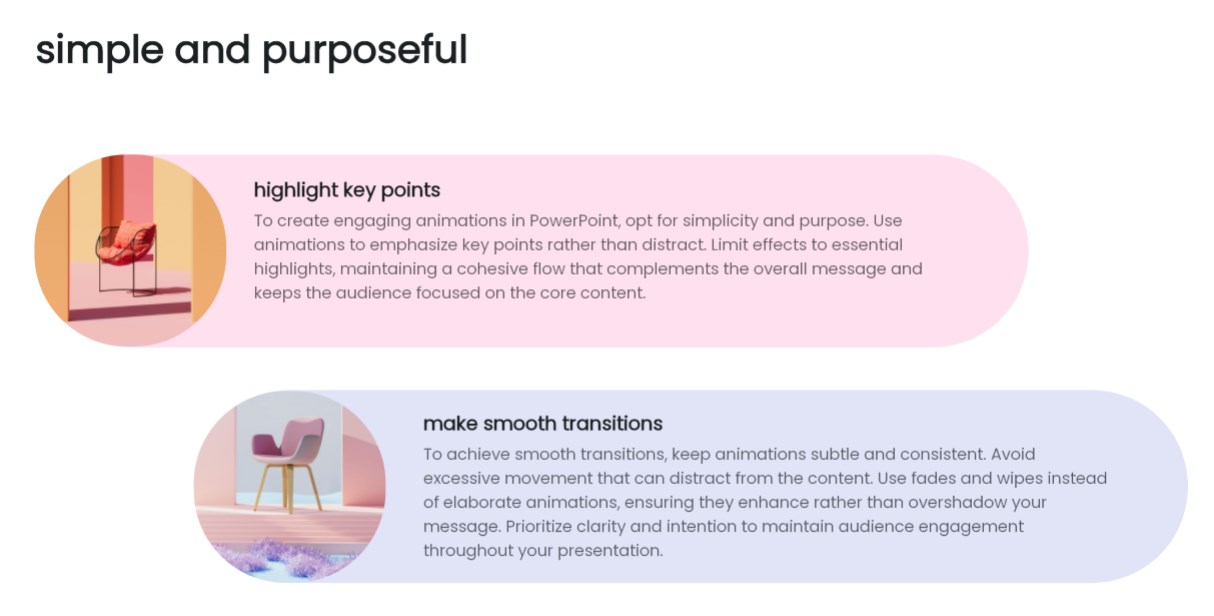
Keep animation simple and purposeful. Reveal a process step when you explain it, rather than animating every object. In the Animations tab, inspect the effect’s Start setting: On Click waits for your input; With Previous starts alongside the prior effect; After Previous follows it. Microsoft’s animation timing guide explains these controls. Run the slide show once to catch an effect that hides evidence until too late.
9. PowerPoint Practice Tips
Rehearsal helps you find where the explanation becomes unclear. Present to one colleague and ask them to summarize the decision or lesson in their own words. If their summary differs from the intended message, revise the slide or explanation before polishing the delivery. Ask for comments tied to a slide and a sentence, not just “looks good.”
For the same sample slide, rehearse a short explanation: “This sample contains 80 requests. Twenty were missing a required field. We have not tested the revised form yet; today I am asking who will own the pilot.” If that takes longer than the time allocated to the slide, remove an aside from the spoken explanation instead of hiding the qualification.
When you need feedback from several reviewers, a presentation feedback rubric gives them a common way to comment on evidence, clarity and delivery.
10. PowerPoint Tips for Memorable Endings
End with what the audience should do, decide or remember. A decision slide needs the requested choice, the owner and the next review point if those are known. A lesson may end with a short application question. Avoid introducing a new claim on the closing slide that the body of the presentation never supported.
11. Time Management PowerPoint Tips
Rehearse with a timer and record where the time goes. For a ten-minute briefing, you might reserve two minutes for the decision and questions, leaving eight minutes for the explanation. That is a planning example, not a universal rule. If the rehearsal runs long, remove a secondary argument or move it to the appendix; speaking faster usually makes the same crowded deck harder to follow.
12. Check readability and accessibility in the delivery view
Check the slide show at the size and distance the audience will use. Enlarge labels that disappear on a projector, keep text and background clearly distinguishable, and do not use color alone for status. Run PowerPoint’s Accessibility Checker for issues such as missing alt text, then inspect the slides yourself: Microsoft notes that automatic checks cannot find every problem. A chart alt should communicate its point, not say only “chart.”
Final Thoughts
Start by revising one crowded slide: state its point, keep the evidence visible and move the explanation into notes. Then read the deck’s titles in sequence and rehearse the decision or takeaway. Use what you observe to decide the next edit, rather than adding effects or more content by default.