Converting a Word document into a PowerPoint presentation is a common task in both academic and professional settings. While Word is ideal for detailed writing and structured documentation, PowerPoint excels at visual communication, helping your audience absorb information more clearly and efficiently. If you need to turn long written content into a polished, engaging slide deck, this guide introduces the best Word-to-PowerPoint conversion approaches, step by step instructions, practical tips, and key things to watch out for.
1. Why Convert Word to PowerPoint?
Word documents contain rich text, paragraphs, and detailed descriptions, perfect for writing and reading. However, presentations demand visual hierarchy, clear structure, and concise information. Converting Word to PPT allows you to:
- Present complex information visually
- Improve clarity and audience engagement
- Save time by reusing existing content
- Enhance communication efficiency in meetings, speeches, and reports
Whether you’re a student, office worker, teacher, or content creator, knowing how to convert Word to PPT quickly and effectively is a valuable productivity skill.
2. Three Ways to Convert Word to PowerPoint
Three common approaches are outline import in desktop PowerPoint, a file-conversion service, and an AI presentation tool. Cost and availability depend on the software and plan; none should be assumed to provide unrestricted free conversion.
Method 1: Import a Word Outline into Desktop PowerPoint
Desktop PowerPoint can import a Word outline. In Windows, use DOCX, RTF, or TXT; on Mac, save the outline as RTF and use Home → New Slide → Outline. PowerPoint for the web does not support this import. The method works best when the text is already organized for slides.
How to use it:
- In Word, apply Heading 1 to each intended slide title and Heading 2 to the points beneath it.
- Save and close the Word file.
- In desktop PowerPoint for Windows, choose Home → New Slide → Slides from Outline.
- Select the Word outline and insert it.
Review the imported titles and points, then add images, charts, and layouts separately.
Pros
✔ No extra software
✔ Fast and stable
✔ Good compatibility
Cons
✘ Only available on some Office versions
✘ Requires well structured heading formatting
✘ Complex layouts may convert poorly
Method 2: Check an Online Conversion Service
An online converter may be useful when you need a file transformation. Check whether it accepts Word directly or requires a Word-to-PDF step followed by PDF-to-PowerPoint conversion.
Services you may encounter include the following; confirm their supported conversion path and current limits:
- Smallpdf
- iLovePDF
- Convertio
- HiPDF
How it works:
- Check that the service supports your intended Word-to-PowerPoint conversion path
- Upload your Word document
- Wait for automatic conversion
- Download the generated PPTX file
- Adjust layout or apply a PPT template if necessary
Advantages
✔ Browser-based access
✔ No installation
✔ Fast and convenient
Limitations
– Possible file upload size limits
– Some platforms restrict daily conversions
– Privacy concerns for sensitive documents
– Layout accuracy varies across tools
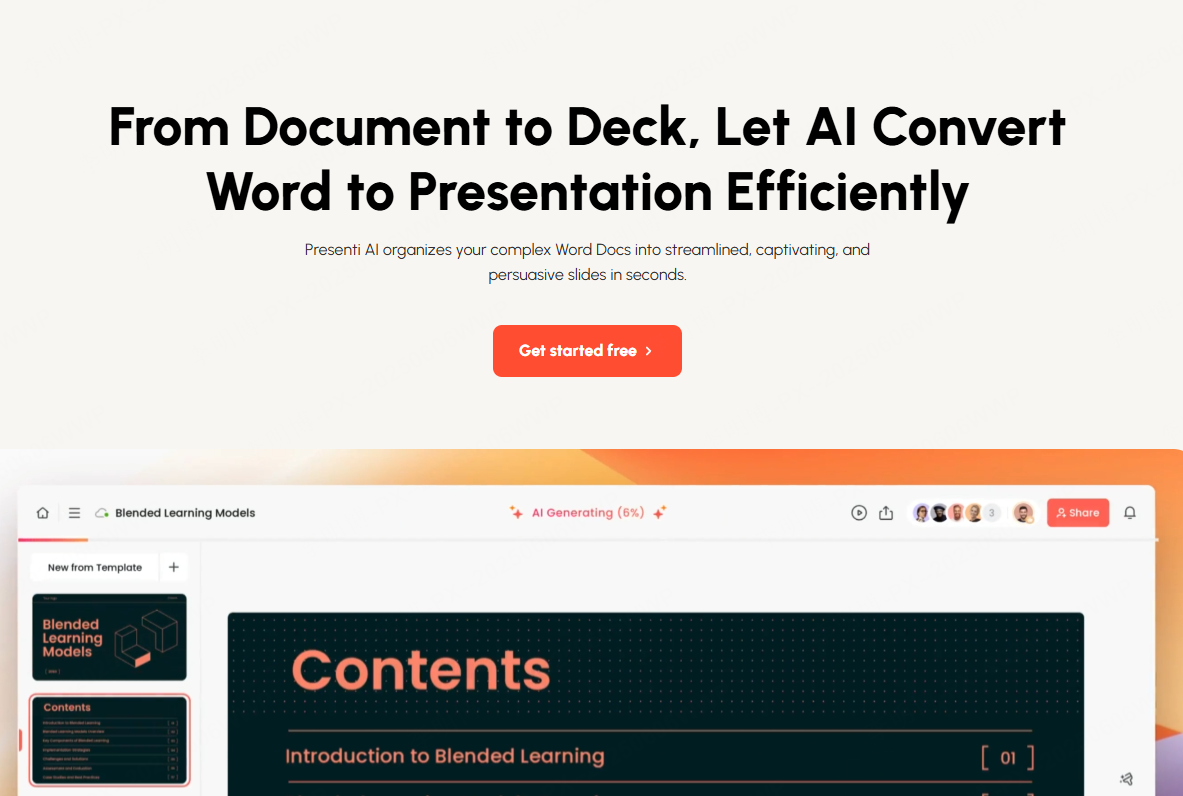
Method 3: AI Tools That Convert and Design PPT Automatically
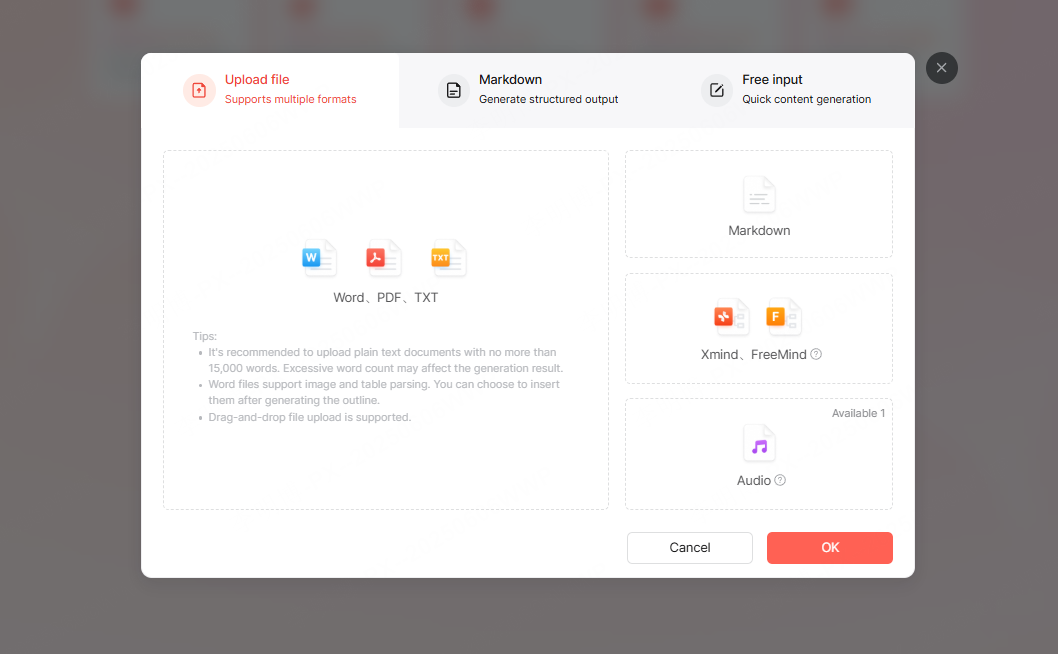
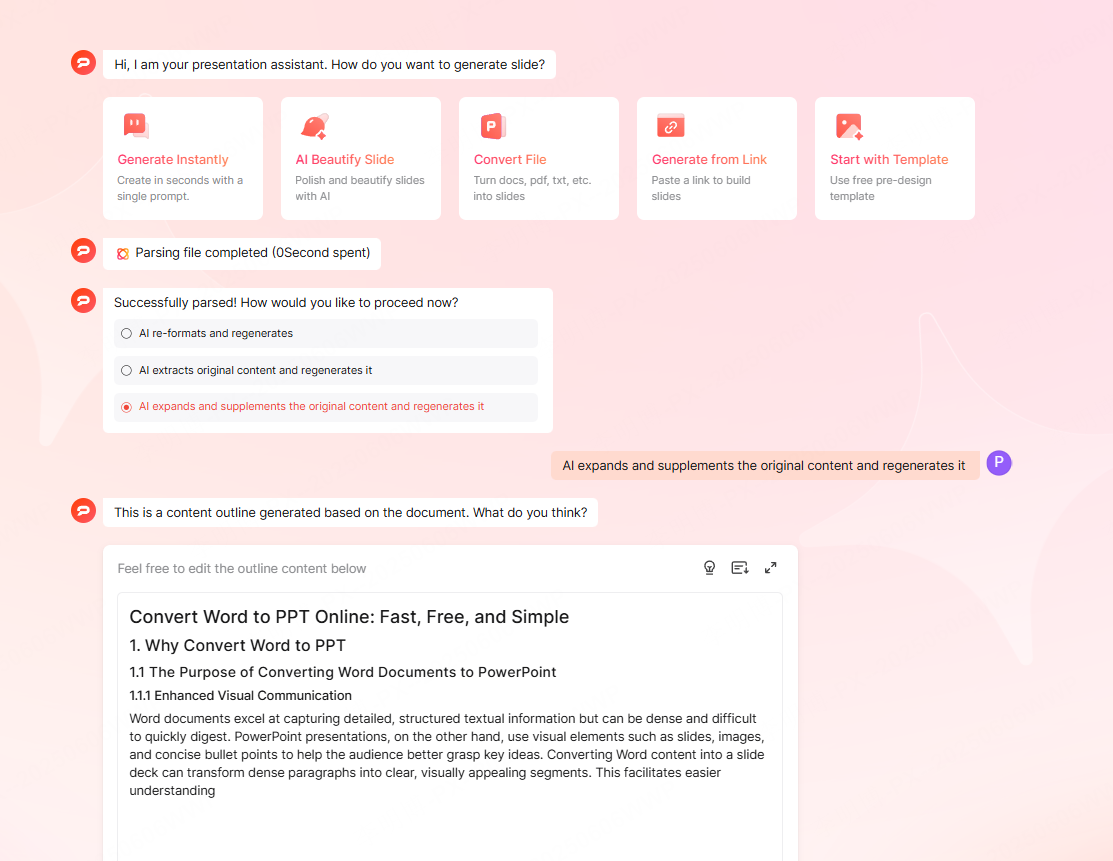
An AI presentation tool can summarize a document and propose a new slide structure. This is a rewriting workflow, so compare the draft with the source to catch omissions, invented details, or changes in meaning.
Typical workflow:
- Open an AI presentation tool
- Select “Import Word to PPT” or similar
- Upload your file
- AI analyzes headings, content structure, and key ideas
- The tool generates a clean, professional PPT automatically
Compared to traditional converters, AI tools offer:
✔ Automatic summarization and layout optimization
✔ Professional templates
✔ Smarter visual design
✔ Less manual editing
✔ Faster results with better aesthetics
Choose AI when you want help restructuring the content and can review the resulting draft.
3. Step by Step Word to PPT Conversion Guide
To ensure smooth and accurate conversion, follow these steps:
Step 1: Prepare a Well Structured Word Document
Before converting, apply consistent Word styles:
- Heading 1 for intended slide titles
- Heading 2 for the points on each slide
- Use deeper headings sparingly and check how they import
- Keep full explanations in the source document or speaker notes
Remove:
- Overly complex tables
- Special decorative symbols
- Unnecessary formatting
Structured content generates cleaner, more accurate slide layouts.
Step 2: Select a Conversion Method
- If you need a quick conversion → Use online tools
- If you have a supported desktop PowerPoint version → Try outline import
- If you want a summarized draft → Try an AI presentation tool and review it against the source
Step 3: Beautify and Finalize the PPT
After conversion, improve the presentation by:
- Adjusting font size and spacing
- Applying a consistent color theme
- Adding icons, images, or diagrams
- Ensuring logical flow and readable formatting
- Reviewing text accuracy
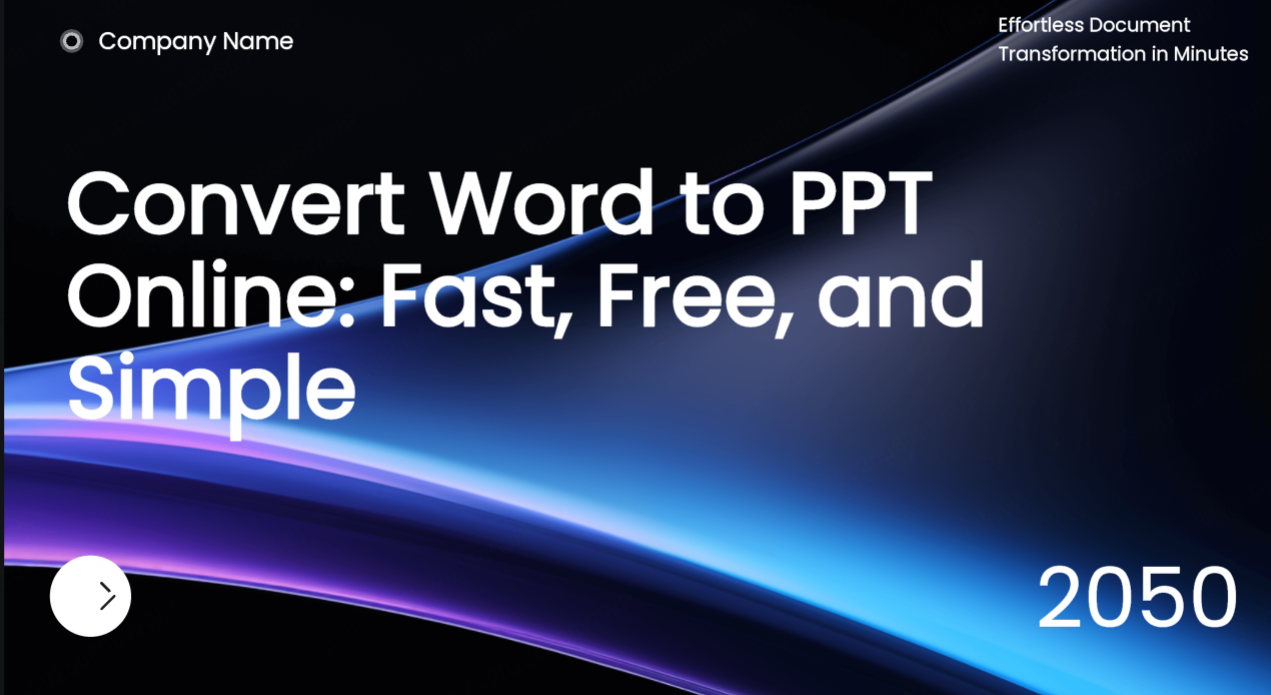
A bit of polishing turns basic slides into a compelling presentation.
4. Tips and Precautions for Better Conversion Results
1. Clean and structure your Word file first
Consistent heading styles ensure accurate slide hierarchy.
2. Choose the right tool for the scenario
Use outline import when you want a simple text structure, a converter when file-format conversion is the priority, or AI when you want help condensing the document. Check editing and export access before choosing.
3. Review and optimize after conversion
Check for layout errors, missing elements, or truncated text. Uniform design improves professionalism.
Conclusion
The best method depends on what you need to preserve. Outline import works from heading levels; conversion services transform files; AI tools may summarize and reorganize the content. Check important figures, charts, citations, and slide order against the Word document before sharing the result.