A board meeting presentation should make it easy to see what has changed, which choices need attention, and what management is asking the board to do. Put the decisions near the front. Use the remaining slides to explain the evidence, alternatives and consequences well enough for a useful discussion.
The deck below is designed around one substantial operating decision, with a short performance update for context. You can adapt the structure when there are several decisions, but give each one its own question and supporting evidence. A slide labeled “Discussion” is not yet a question the room can answer.
Give each agenda item a clear job
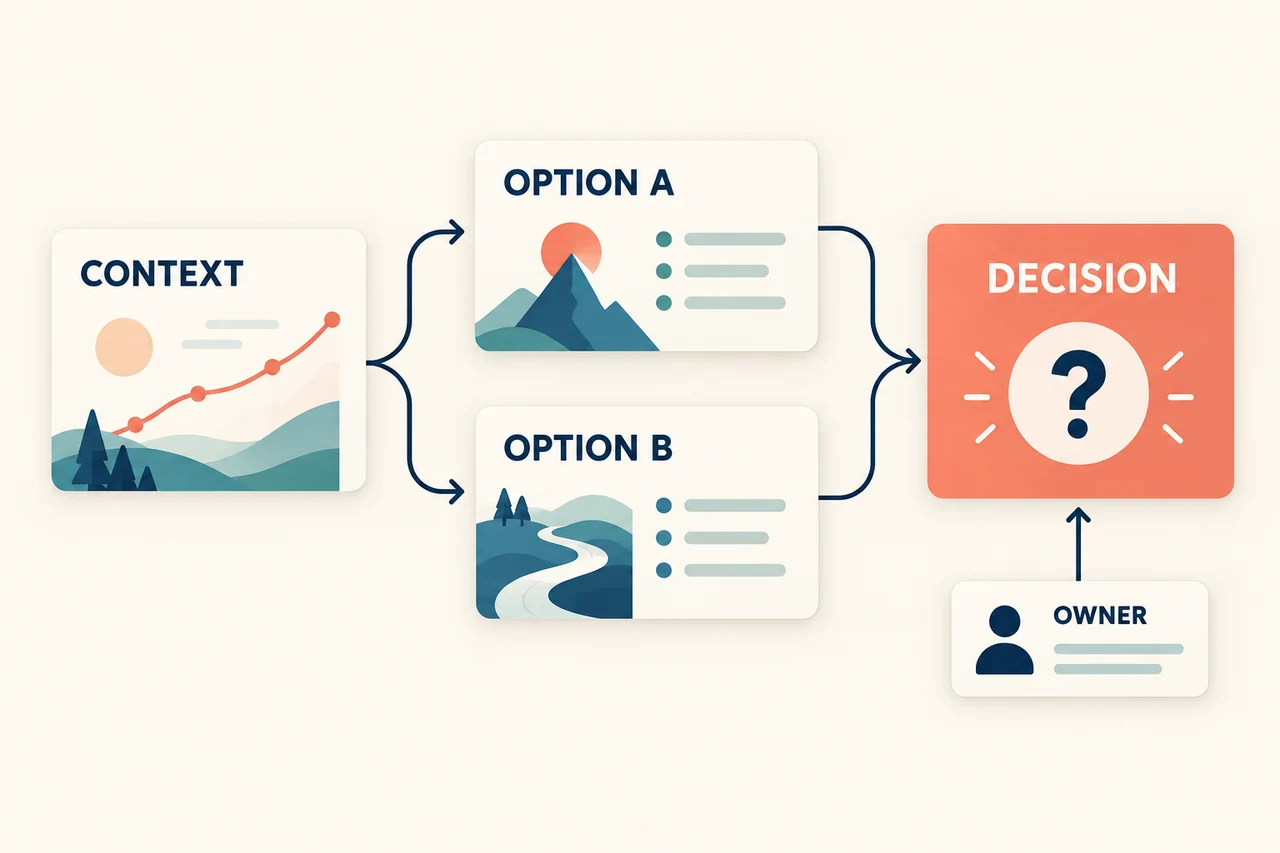
Label an item as information, discussion or decision. Information explains a material development. Discussion asks for judgment or challenge. A decision asks the appropriate people to choose or approve a defined action. Confirm which matters belong with the board under your organization's process before presenting an approval request. If an agenda item concerns audit findings, use the audit-results presentation guide to keep the observed deviation, its evidence and management's proposed response distinct before asking for a decision.
That distinction changes the slide. “Customer support update” might be informational. “Which service level should we prioritize while capacity is constrained?” invites discussion. “Approve a six-week pilot within the stated spending cap” requests a particular decision.
Use the opening page to list the two or three items that most need the room's attention. Beside each, write the question, the person presenting it and the time you intend to reserve for it. Routine detail should not consume the discussion time simply because it appears first in the reporting system.
A board meeting template from Beautiful.ai likewise emphasizes objectives and concise summaries. A template supplies useful containers; your team must decide which questions deserve those containers.
Separate the reading packet from the live discussion
Readers may need detailed figures before the meeting, while the live conversation needs a shorter path through the choices. Make both easy to navigate. A packet can contain a performance summary, supporting analysis and decision briefs; the presentation can direct attention to the changes and unresolved choices.
For each metric, retain the reporting period, definition, comparison basis and source owner. Explain a changed definition where it appears. Put detailed reconciliations and supplementary tables in clearly named supporting pages rather than shrinking them to fit the main slide.
Coordinate the distribution timing with the meeting owner. If a figure changes after the packet is sent, identify the revised page and its effect on the recommendation. Silently replacing a number makes it harder for the room to distinguish a new fact from a reading mistake.
An investor update may provide some of the same performance context, but it has a different job: maintaining an ongoing account of progress and help needed. A board discussion deck must also explain the choices before the group and how their outcome will be recorded.
A nine-slide path for one major decision
This outline is a starting point for a meeting that already has a separate agenda and required formal business. Adapt it to your board's process; it is not a complete governance agenda.
- What needs attention today. Name the decision, the recommendation and any other material discussion item.
- What changed since the previous meeting. Show outcomes and exceptions, including progress on previously agreed actions.
- Why this decision is necessary now. Connect the operating problem to timing, capacity or another real constraint.
- What the evidence establishes. Present the finding and its limits. Keep assumptions visibly separate.
- Which options remain viable. Compare the same criteria across the options, including deferral when it is a credible choice.
- Why management recommends this option. Explain the trade-off, including what the option does not solve.
- How the team would act. Show the accountable owner, milestone, dependencies and review trigger.
- What the group is being asked to decide. State the exact scope and proposed conditions in readable language.
- What happens after the meeting. Reserve space for the actual outcome, follow-up owner and unresolved questions.
The opening executive summary slide can compress the recommendation. It should point to the evidence pages without replacing them. If there are two unrelated decisions, repeat the decision sequence for each rather than putting several approval requests in tiny boxes on one page.
Worked example: a six-week capacity decision
Consider a fictional software company, Meridian Systems. Its integration team has six weeks of migration work that competes with already committed product work. Management wants the board to discuss a bounded external-support option. The following figures are illustrative planning inputs, not vendor quotations or observed results.
The first draft of the request says, “We need more engineering capacity.” That leaves scope, alternatives and accountability open. A more useful decision question is: “Should Meridian authorize external migration support for six weeks, capped at $36,000 in service fees, while retaining an internal lead and a week-two continuation review?”
| Option | Resource implication | Main trade-off |
|---|---|---|
| Reassign the internal team | Two engineers for six weeks: 12 engineer-weeks redirected from planned work. | Avoids the proposed vendor fee, but requires naming the product work that would move. |
| Use external support | Six weeks × $6,000 per week = $36,000 in service fees, plus an internal lead for two days per week. | Retains more internal delivery capacity, while adding onboarding, coordination and supplier dependencies. |
| Defer the migration | No new vendor commitment now; retain the current operating process. | Delays the intended improvement and requires a revised plan for the continuing workload. |
The $36,000 is not the total economic cost. The internal lead's twelve working days, any taxes, and other applicable costs need separate treatment in the real estimate. Likewise, internal reassignment is not “free”: it consumes capacity and changes another commitment. Showing those distinctions makes the comparison more informative than a price-only table.
Make the evidence and assumptions visible
Meridian's supporting page would need the migration scope, the existing capacity plan, the supplier's written proposal and the work that would be delayed under the internal option. It would also identify unresolved access, onboarding or security requirements that could prevent the external team from starting.
“External support will finish the migration” is too strong for a planning slide. A defensible recommendation explains the conditions under which the plan is expected to work and the evidence still needed. If those conditions are not established, ask for a narrower next step, such as completing supplier evaluation, rather than presenting the full commitment as ready.
Write an approval request someone can respond to
Proposed decision: authorize a six-week migration-support engagement with service fees capped at $36,000, subject to the agreed access and supplier reviews. The engineering lead owns delivery. At the end of week two, review onboarding completion, migrated test cases and the remaining workload before continuing the plan.
This wording specifies the requested action; it does not claim the board has approved it. The actual motion, conditions and record should follow the organization's required process. If the group changes the cap, scope or review condition, the final record must reflect the change.
Copy a decision brief before designing the slides
Fill this out for each substantive decision. Missing evidence becomes easier to see before it is hidden behind a polished chart. Use the decision brief and follow-through log as a copyable text file.
Topic and meeting:
Purpose: information / discussion / decision
Question the group must answer:
Recommendation and scope:
Why this needs attention now:
Viable alternatives, including defer if appropriate:
Criteria used to compare them:
Evidence: source, period, owner and status
Assumptions and unresolved questions:
Proposed conditions or spending/resource limits:
Accountable owner:
Milestone, review date and evidence for that review:
Supporting pages or source references:
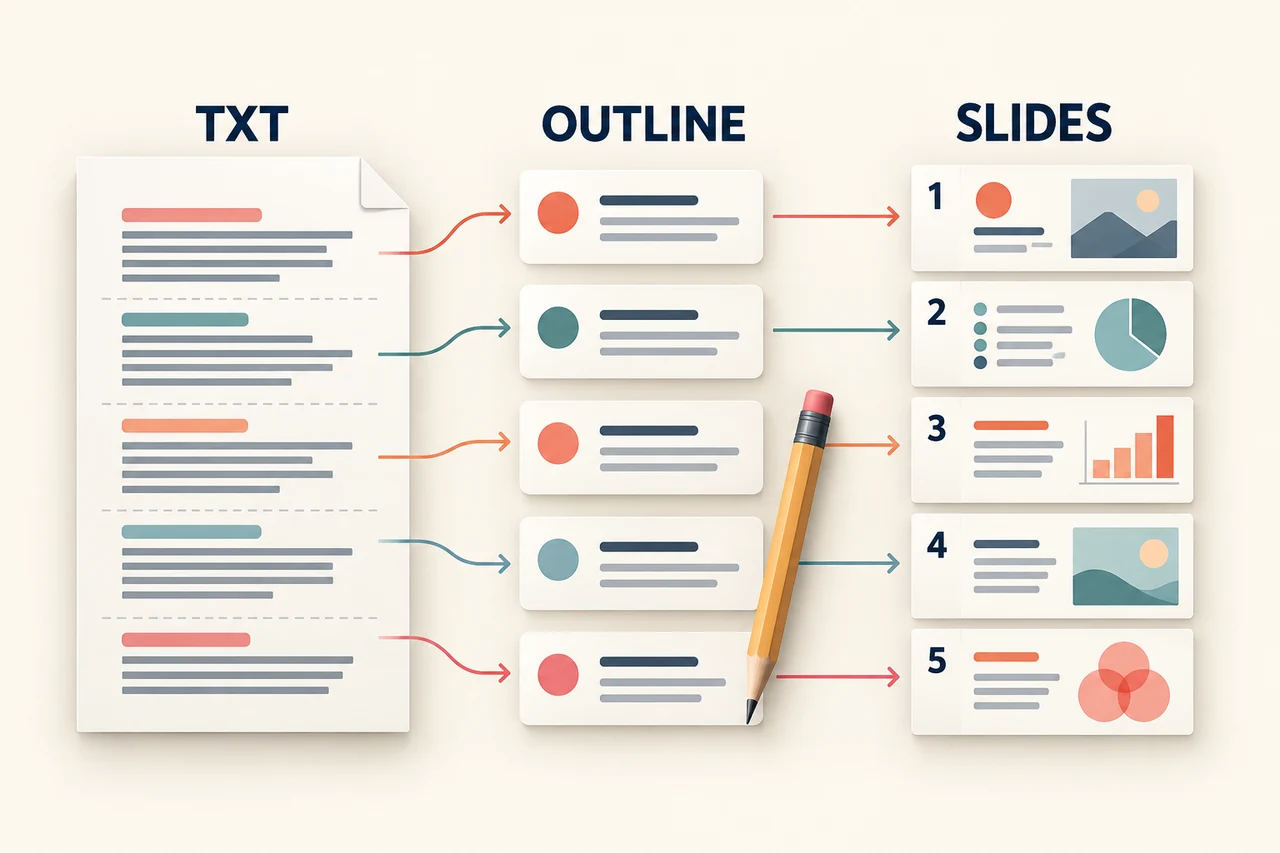
You can use the completed brief in Presenti's text-to-presentation workflow to draft an outline. Ask for a recommendation, evidence, options, proposed conditions and follow-up sequence. Review the outline before styling it, and remove any invented business result or assumption presented as a fact.
Keep the final decision wording with the people responsible for it. If you need to deliver a PPTX or PDF, check the current export plan and inspect the file that will be sent to the board.
Record the outcome while the discussion is still clear
After the meeting, distinguish approved, revised, deferred and noted items. A postponed decision needs an owner for the missing evidence and a return date. An approved proposal needs its actual conditions. An item merely noted should not reappear next month as an approval.
| Decision record | What to enter |
|---|---|
| Outcome | The actual decision or status, confirmed through the required process. |
| Scope and conditions | What was included, excluded, capped or made conditional. |
| Owner and next date | Who must act and when the result returns for review. |
| Open question | The evidence still required and who will supply it. |
Use that record to open the next relevant meeting: what was agreed, what happened, and what now needs attention. The presentation then becomes part of an accountable conversation instead of a fresh collection of updates every quarter.
Separate the pre-read, the meeting choice, and the decision record
A board deck is easier to govern when it separates what directors read in advance from what they must decide in the room. Put the decision, options, conditions and recommendation near the front, then keep supporting analysis in an appendix. Mark illustrative numbers as examples rather than performance claims.
End with a decision record: approved or deferred, conditions, accountable owner and due date. After the meeting, update that record without rewriting the evidence slide. The next reader should be able to tell what was proposed, what was accepted and which questions remain open.