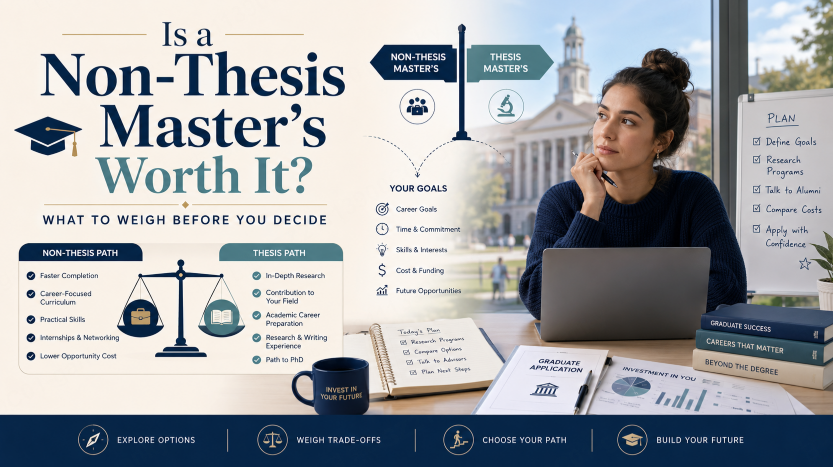
"Worth it" depends entirely on what you're optimizing for — and that's genuinely the whole answer, even if it's not a satisfying one to read at 1am while comparing program options. A non-thesis master's is worth it for some career paths and a real setback for others. The trick is knowing which one you're on before you commit.
Here's a straightforward look at what you actually give up and gain by skipping the thesis, and a short set of questions that tend to make the decision obvious once you answer them honestly.
Quick Refresher: What "Non-Thesis" Actually Means
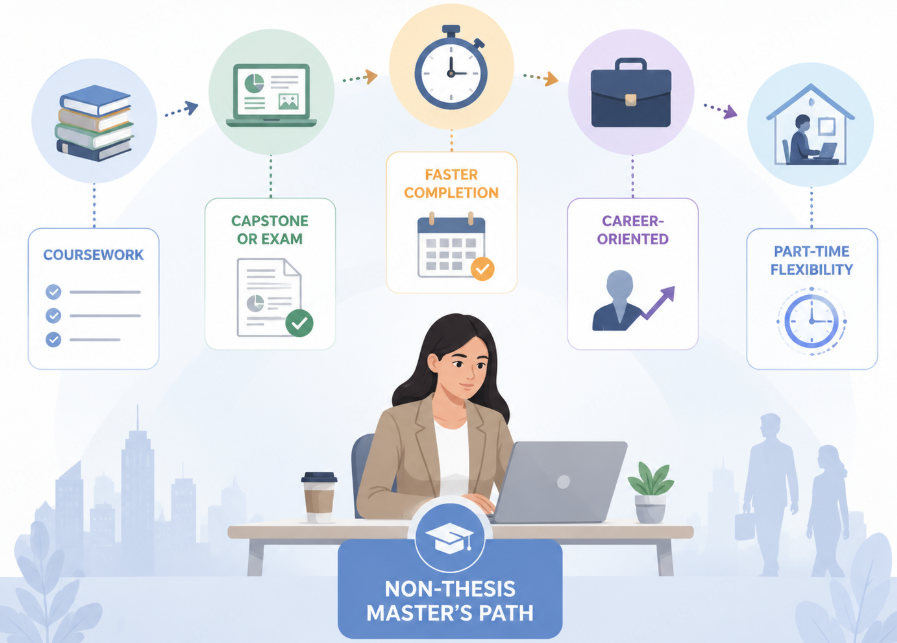
A non-thesis master's usually replaces the formal thesis with coursework and another requirement, such as a capstone, exam, internship, or portfolio. Professional and applied programs are not always non-thesis, and capstones may include original research. You still complete a substantial final deliverable in most programs — it's just not a formal, independently designed research study defended before a committee. Before comparing the routes, check whether your master's program requires a thesis and what its actual alternative deliverable involves. Read Choosing a Thesis vs. Non-Thesis Program: What Every Graduate Student Needs to Know
It's not a lesser degree, and it's not a shortcut in the negative sense some people assume. It's a different tool, built for a different outcome.
What You Give Up by Skipping the Thesis
- Independent research experience. Designing a study from scratch, running into dead ends, and defending your conclusions under questioning is a specific skill set that a program may develop through a thesis, research-intensive capstone, assistantship, or other supervised project.
- A publishable output. A thesis may provide material for publication, but publication is not guaranteed. Some capstones or other research projects can also produce publishable work.
- A stronger PhD application. Some research-focused admissions committees value a completed thesis — it's concrete evidence you can execute a multi-month research project independently, which coursework grades alone don't demonstrate.
- A built-in mentor relationship. Thesis students typically work closely with an advisor for a year or more; that relationship often becomes a recommendation letter, a research collaborator, or a career reference down the line.
What You Gain by Skipping It
- Time. Compare each track's published requirements and actual completion patterns. Thesis work can have an uncertain timeline, but a non-thesis route is not automatically shorter.
- Cost. Extra semesters mean extra tuition, and extra time away from full salary if you're not working. Compare total tuition, fees, funding, and the effect on paid work; a funded thesis route may cost less than an unfunded non-thesis program.
- Compatibility with working full-time. Many non-thesis programs are explicitly built for part-time or evening study, but check the actual schedule, placement, laboratory, and capstone requirements.
- Direct relevance to applied roles. A capstone project built around a real business problem, case study, or practicum can translate more directly into interview material for industry roles than a niche research topic does.
When a Non-Thesis Master's Is Clearly Worth It
The case for non-thesis is strongest when most of the following are true:
- You're aiming for an industry or applied role, not academia or a research position
- You already have relevant work experience the degree is meant to formalize or accelerate, not launch
- You're working while studying and need a predictable, bounded timeline
- Your target employers care about the credential and applied skills more than a research portfolio
- You have no interest in a PhD, now or later
This describes a large share of MBA students, working professionals in education or healthcare administration, and applied technical fields where the degree functions as a credential rather than a research credential.
When You Might Regret Skipping the Thesis
The case gets weaker — sometimes significantly — if any of these apply:
- You're seriously considering a PhD, even as a "maybe, eventually." Retrofitting research experience after the fact, through a post-bacc or standalone project, is possible but adds real time and cost you could have avoided.
- Your target field genuinely values a research background — many research-adjacent industry roles (R&D, certain data science and policy positions) look for exactly the skills a thesis demonstrates.
- You want to publish or build a portfolio of original work that a resume line alone won't capture.
- Your program's non-thesis track is a clear afterthought, with a thin capstone requirement that won't hold up well as an interview talking point compared to a real research project.
If more than one of these fits your situation, it's worth a serious conversation with your advisor before defaulting to the non-thesis track just because it's faster.
A Few Questions That Usually Settle It
| Question | Leans toward |
|---|---|
| Am I applying to a PhD program in the next few years? | Thesis |
| Do I need to finish on a fixed, predictable timeline? | Non-thesis |
| Does my target job value a research portfolio? | Thesis |
| Am I working full-time while studying? | Non-thesis |
| Do I want the option to publish this work? | Thesis |
Use the table to identify priorities, then compare the specific programs; it is not an admissions rule or a guarantee of cost or duration. If they split evenly, it's worth asking your program whether a hybrid option exists — some departments let non-thesis students complete a smaller, optional research project without the full formal thesis requirement.
Presenti AI: Making Your Capstone or Thesis Presentation Count
Whichever track you choose, your program may require a final presentation to faculty, a cohort, or an external panel. A thesis ends in a formal defense; a non-thesis track usually ends in a capstone presentation — and the pressure to present that work clearly is identical either way.
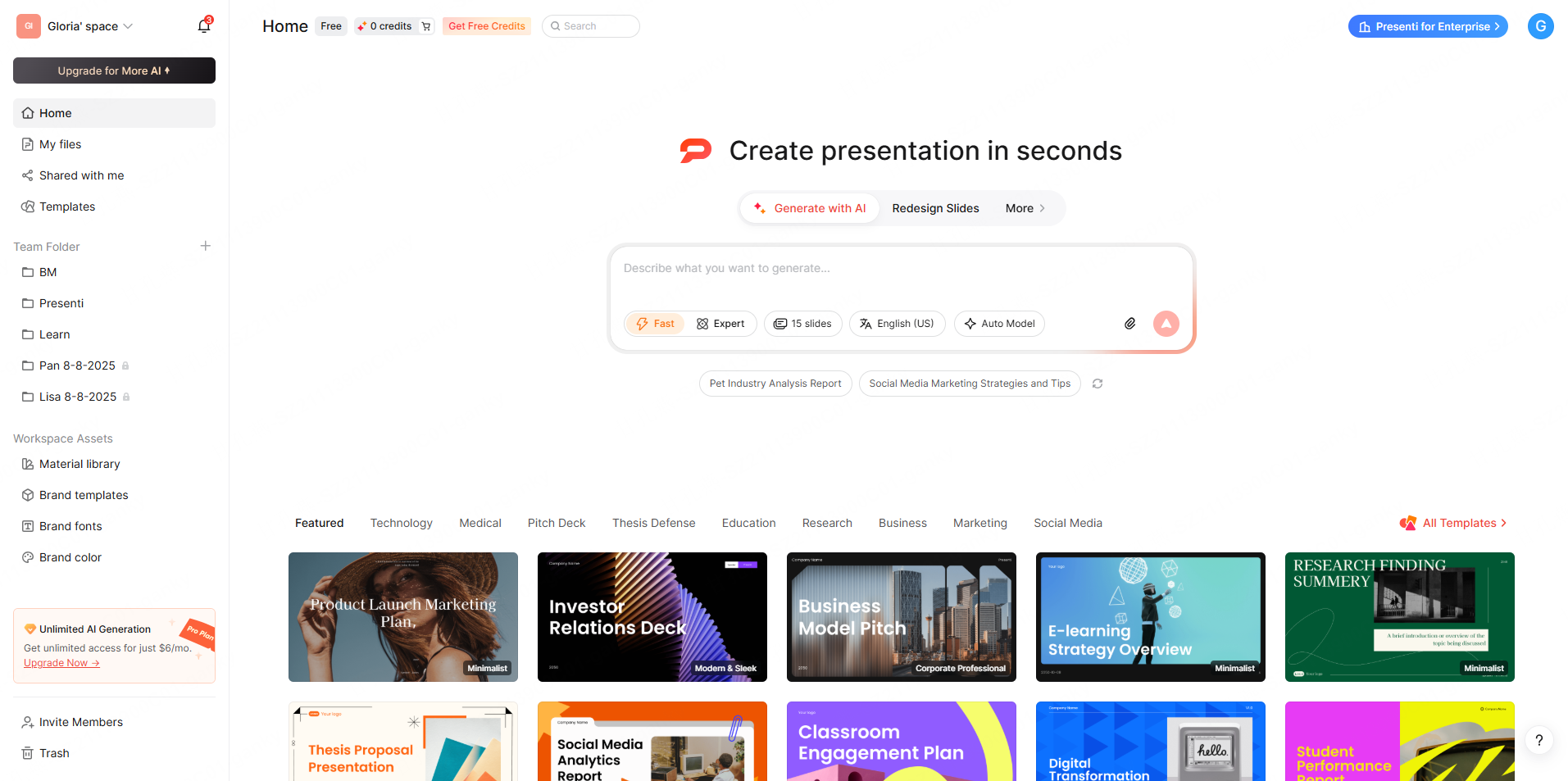
Presenti AI can turn either kind of final project into a presentation-ready deck. Upload your capstone report, thesis chapters, or research summary as a PDF, Word document, or Markdown file — or point it at a web link if your work is already published online — and it generates a structured slide outline built around your actual findings and argument. You can also start from just a text prompt describing your project if you'd rather build the outline from scratch. Word/PDF input and editable PPTX/PDF export are listed on paid plans. Review the outline and exported file against the project before presenting.
The Bottom Line
A non-thesis master's isn't a downgrade, and a thesis-track master's isn't automatically the more "serious" choice — they're built for different destinations. If research or doctoral study is a possibility, compare supervised research opportunities and ask prospective programs what preparation they expect. For applied work, examine capstone quality, placements, employer requirements, funding, and total time to completion. The actual program matters more than the label alone.