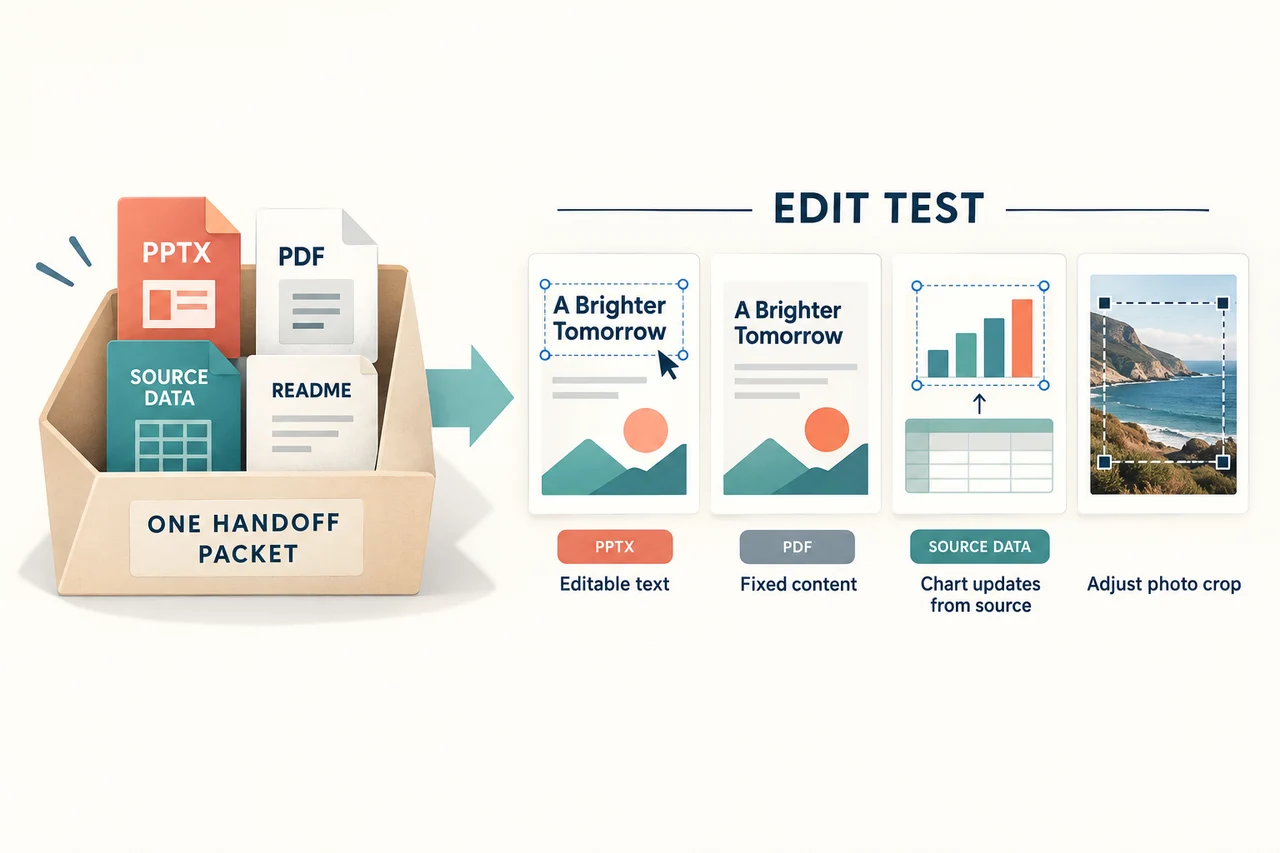
A school project usually asks for more than just a topic — there's a process behind it. A biography project means researching a real person's life. A science fair project means actually running an experiment. A country report means pulling together geography, culture, and history into one coherent picture. The topic is really just the entry point into a whole assignment.
This is a set of 150 ideas sorted by project type instead of subject — biographies, country reports, science fair experiments, inventions, historical events, and more — so you can jump to the format your assignment actually calls for. After the list, we'll cover how to structure a project presentation specifically (different from a regular topic talk) and how to build the slides with Presenti AI.
Just need a topic, not a full project? If your assignment is a straightforward "give a presentation on a topic" rather than a research project, see our 120 PowerPoint Presentation Ideas for Students, organized by subject instead of project type.
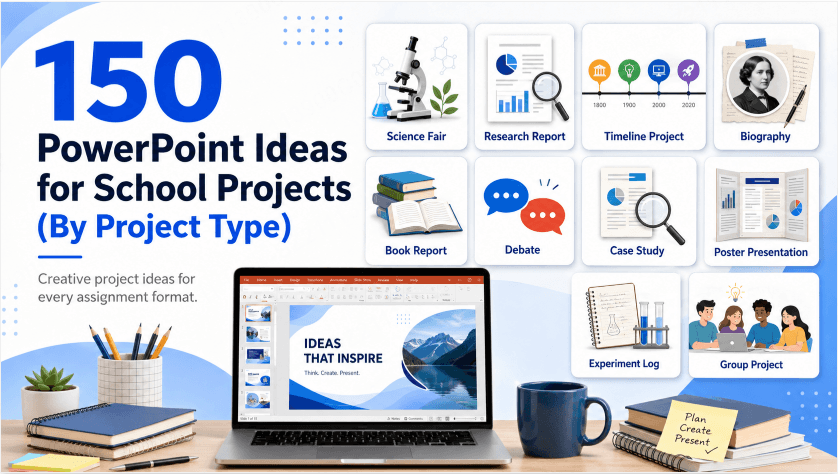
What Makes a "Project" Different From a Regular Topic Presentation
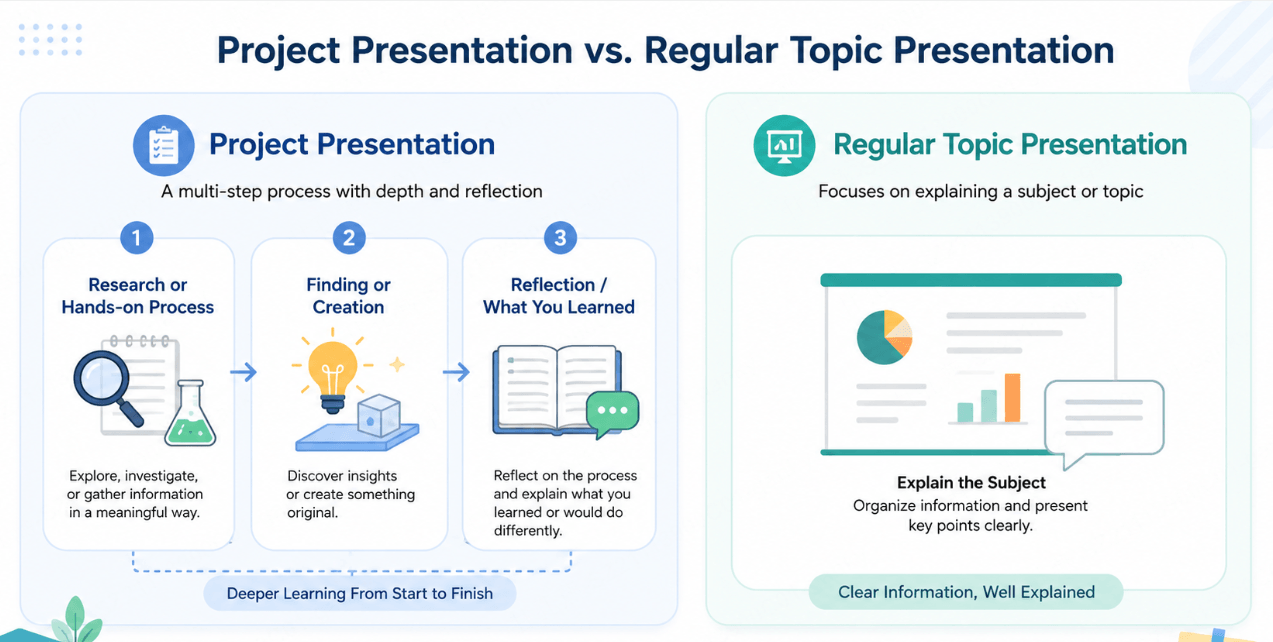
A project-based assignment usually has three parts a simple topic presentation doesn't: a research or hands-on process, an actual finding or creation that comes out of that process, and a reflection on what you learned or would do differently. That structure is exactly why picking the right project type matters as much as picking the right subject — a science fair project and a biography project are built completely differently, even if they're the same length.
For a younger child preparing show-and-tell rather than a research assignment, these short presentation ideas for kids start with familiar interests and simple explanations. The ten categories below cover the project types that come up most often in school assignments, from elementary through high school.
Biography & Famous Person Research Projects (15)
- A scientist whose discovery changed the world
- A civil rights leader and the movement they led
- An inventor and the problem their invention solved
- An artist and how their style changed art history
- An astronaut and their most famous mission
- A world leader and a decision that changed history
- An author and the story behind their most famous book
- An athlete who broke a major barrier
- An entrepreneur and the company they built from scratch
- A musician who changed their entire genre
- An explorer and what they discovered
- A mathematician and the problem they solved
- A wartime leader and their key decision
- A modern activist and the cause they champion
- A historical figure your community doesn't often talk about
Country & Culture Report Projects (15)
- A country's geography and how it shapes daily life
- A country's traditional foods and their origins
- A country's major holidays and how they're celebrated
- A country's flag and the story behind its symbols
- A country's government system, explained simply
- A country's most famous landmark and its history
- A country's traditional clothing and what it represents
- A country's wildlife found nowhere else on Earth
- A country's biggest industry and how it shapes the economy
- A country's traditional music and instruments
- A country's education system compared to your own
- A country's role in a major historical event
- A country's most spoken languages and how they developed
- A country's climate and how people adapt to it
- A country's art and architecture through history
Animal & Habitat Research Projects (15)
- An endangered animal and why it's disappearing
- How an animal’s adaptations help it survive in a particular habitat
- A predator-and-prey relationship in one ecosystem
- An animal's complete life cycle, start to finish
- How an animal communicates with others of its species
- A migration pattern and why an animal makes the journey
- An animal that can survive extreme conditions
- A keystone species and why its ecosystem depends on it
- An animal's unique defense mechanism
- How human activity has changed an animal's habitat
- An animal conservation success story
- A nocturnal animal and how it's built for the dark
- An animal that works in a group or colony
- The difference between two commonly confused animal species
- What fossils reveal about changes within an animal lineage
Book Report & Literature Projects (15)
- A character's transformation from beginning to end of a book
- The setting of a book and how it shapes the story
- A theme in a book and how it's shown through events
- Comparing a book's world to the real world
- A book's title and why the author chose it
- The conflict in a story and how it gets resolved
- A book from a different time period and what daily life was like then
- Predicting what happens after a book's ending
- A book's author and how their own life influenced the story
- Comparing the main character to yourself
- A book series and how the story evolves across books
- The most important decision a character makes in the book
- How a book's genre shapes what happens in the story
- A minor character who deserves more attention
- Rewriting a scene from a different character's point of view
Science Fair & Experiment Projects (15)
- Which liquid makes plants grow fastest
- How different materials affect how fast ice melts
- Whether music affects how fast plants grow
- How much weight different bridge designs can hold
- Which paper airplane design flies the farthest
- How temperature affects how fast a chemical reaction happens
- Whether color affects how much heat an object absorbs
- How different soil types affect seed germination
- Which household items conduct electricity
- How salt affects the freezing point of water
- Whether parachute size affects how slowly it falls
- How different surfaces affect friction and speed
- Which fruit produces the most electricity in a simple circuit
- How light affects where plants choose to grow
- How different shade materials affect readings from a UV-sensitive card in a teacher-approved experiment
Invention & "How It's Made" Projects (15)
- Design an invention that solves a problem in your daily life
- How a common household item was originally invented
- The history of an invention that changed the world
- How a factory-made product goes from raw material to finished item
- An invention that failed before it eventually succeeded
- How a simple machine (lever, pulley, wheel) makes work easier
- Redesigning an everyday object to make it more sustainable
- How a recycling plant sorts and processes materials
- An invention that made a specific job obsolete
- How a specific food is grown, processed, and shipped to stores
- An invention originally designed for one purpose, now used for another
- How a smartphone component actually works
- The engineering behind a bridge, dam, or skyscraper
- An invention idea inspired by something in nature
- How a popular toy or game was invented
Historical Event & Time Period Projects (15)
- A day-in-the-life project set in a specific historical decade
- The causes and effects of a major historical event
- How a historical event is remembered differently by different groups
- A "what if" project: how history might have changed with one different decision
- The technology available during a specific historical period
- How a historical event affected everyday people, not just leaders
- Comparing two historical events with similar causes
- A primary source analysis project — a letter, photo, or document
- How a historical movement started with a small group of people
- The role a specific location played in a major historical event
- How a historical event is portrayed on film versus what really happened
- A timeline project tracing how an idea or technology spread
- The economic impact of a major historical event
- A historical event your family or community was personally connected to
- How historians actually know what they know about an ancient civilization
Compare-and-Contrast Projects (15)
- Two historical figures who wanted the same thing but took different approaches
- Two countries with similar geography but very different cultures
- Two inventions that solve the same problem in different ways
- Two animals that live in similar habitats but survive differently
- Two book or movie versions of the same story
- Life today versus life 100 years ago, in one specific area
- Two forms of government and how decisions get made in each
- Two renewable energy sources and their tradeoffs
- Two historical leaders faced with a similar crisis
- Two artistic movements from different time periods
- Two sports and the skills they each require most
- Two diets or lifestyles and their health tradeoffs
- Two major cities and how their geography shaped their growth
- Two languages and how they express the same idea differently
- Two competing scientific explanations and the evidence used to evaluate them
Persuasive & Solution-Focused Projects (15)
- Propose a solution to a problem in your own school
- Design a public awareness campaign for an issue you care about
- Propose a change to a local rule or policy, with your reasoning
- Design a community garden or green space for your neighborhood
- Propose a new school club or program and why it's needed
- Create a plan to reduce waste in your school cafeteria
- Propose an accessibility improvement for your school or town
- Design a public service announcement about a health topic
- Propose a fundraising plan for a cause you care about
- Create an action plan for reducing a specific type of pollution
- Propose a redesign of an underused public space
- Design a plan to make a hobby or sport more accessible to others
- Propose a solution to reduce screen time among students
- Create a plan for a school recycling or composting program
- Propose an idea to make your community more welcoming to newcomers
Career & Future Path Projects (15)
- A career you're curious about and what a typical day looks like
- The education path required for a specific career
- How a specific industry has changed over the last 20 years
- A "future of work" project: how a job might change in 20 years
- An interview-style project featuring someone in a career you admire
- Comparing two career paths that solve similar problems differently
- The skills needed for a career that didn't exist 10 years ago
- A day-in-the-life project shadowing a specific profession
- How automation is changing a specific industry
- A budget project: planning a realistic starting salary budget in a chosen field
- The history of a profession and how it's evolved
- A "dream path" project: designing your ideal career step by step
- Comparing entrepreneurship to working for an established company
- An unconventional career path and how someone actually got there
- Researching what a company actually looks for when hiring in a chosen field
How to Structure a School Project Presentation
A project presentation follows a different shape than a straight topic talk, because it needs to show the process, not just the information. This structure works across nearly every category above:
- The question or goal. What were you trying to find out, solve, or explain? State it plainly on an early slide.
- Background. What someone needs to know before your process or findings make sense.
- Your process. What you actually did — researched, tested, built, interviewed, compared. This is the part that makes a project a project rather than a report.
- Your findings or result. What you learned, built, or concluded. Lead with the most interesting or surprising part.
- Visual evidence. Photos of what you built, a chart of your data, a map, a timeline — whatever your process actually produced.
- Reflection. What surprised you, what you'd do differently, or what you'd want to explore next. Many rubrics grade this section specifically, so don't skip it.
- Sources. Where your research or data came from.
Allow enough space to show the process and findings, then trim the outline to the assignment’s time limit. The rubric and rehearsal matter more than a fixed slide count.
Build Your Project Slides Fast With Presenti AI
Once you've got a project type and some research or results in hand, Presenti AI can draft slides from your reviewed material using the process-based structure above.
You can start from a reviewed outline or a supported source file. Word/PDF/TXT import and editable PPTX/PDF export are paid features. Check that the draft preserves your methods, actual results, and limitations rather than filling gaps with invented findings.
Frequently Asked Questions
What's the difference between a school project and a regular presentation topic?
A project usually involves an actual process — research, an experiment, an interview, something built or created — on top of the topic itself. A regular topic presentation just explains a subject; a project presentation has to show what you did and what you found, not just what you know.
How long should a school project presentation be?
Use the rubric and time limit to decide. A 10–14-slide outline may help organize a longer project, but a shorter assignment may need fewer slides. Rehearse with your actual explanations before settling the count.
What's the easiest project type for a tight deadline?
Biography and country report projects tend to be fastest, since the research is usually well-documented and easy to find. Science fair projects take longest because they require an actual experiment before you can present anything.
Can these project ideas work for a group assignment?
Yes — most divide naturally. A country report splits into geography, culture, government, and history; a historical event project splits by cause, key events, and effects; a science fair project splits into background research, testing, and results analysis.
The Bottom Line
A school project presentation is really two assignments in one: doing the actual work — researching, testing, building, comparing — and then presenting it clearly. Pick a project type that matches what your assignment is actually asking for, follow a structure that shows your process and not just your topic, and the presentation itself tends to come together fast once the real work is done.